The restaurant industry today no longer competes on taste and service alone.
Relentless cost pressures, rising labour expenses, inflation, and guests' expectations for speed and ease create a new reality for businesses.
Menu printing costs, order mix-ups during peak hours, and time lost in payment and reconciliation processes… All this operational burden directly impacts profitability.
That’s why digitalisation is no longer a choice but a prerequisite for sustainable profitability. The real question isn’t whether to go digital, but where to start and which steps truly move the needle.
In this guide, we explore 5 digital moves that restaurants can implement quickly to increase profitability, addressing real problems step-by-step.
If you are ready, let’s begin!
5 Digital Steps That Increase Restaurant Profitability
Projections for hospitality in 2026 show that automation-supported restaurants achieve faster service flows, lower waste rates, and higher basket values compared to traditional businesses.
So, where should you start in practice?
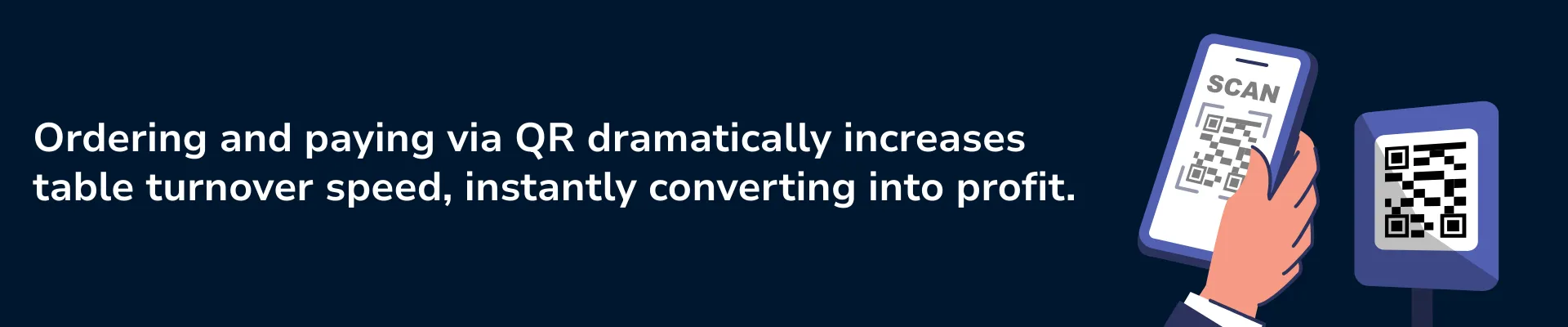
1. Automated Orders for Increased Table Turnover Rate
Order transmission and payment handling remain the primary bottlenecks slowing down service operations.
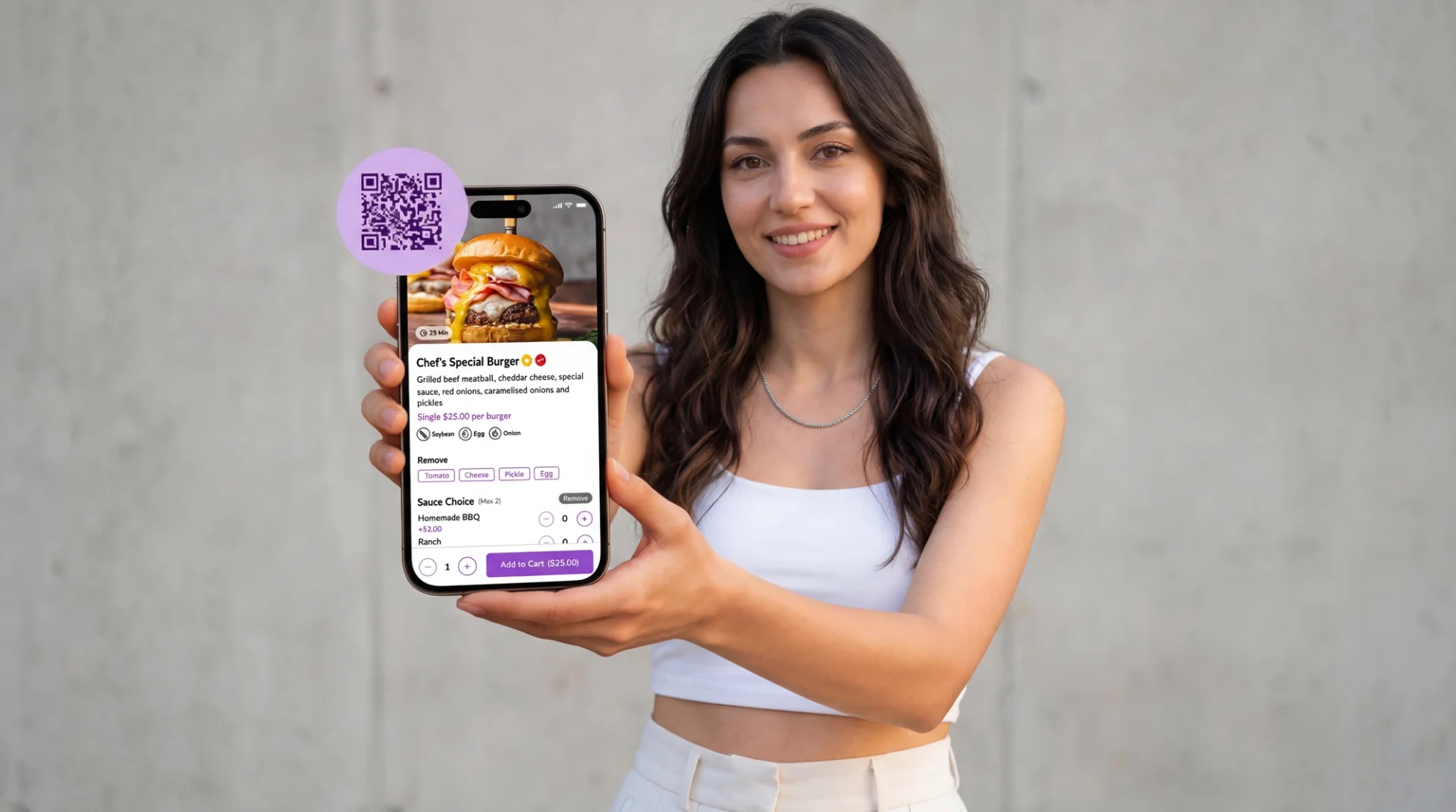
When an order & payment flow runs via QR code from the table, the burden on the waiter decreases, the table is vacated faster, and the total capacity of the operation increases.
Automated systems streamline the order-to-payment line in a single step; especially during peak hours, minutes turn into profit.
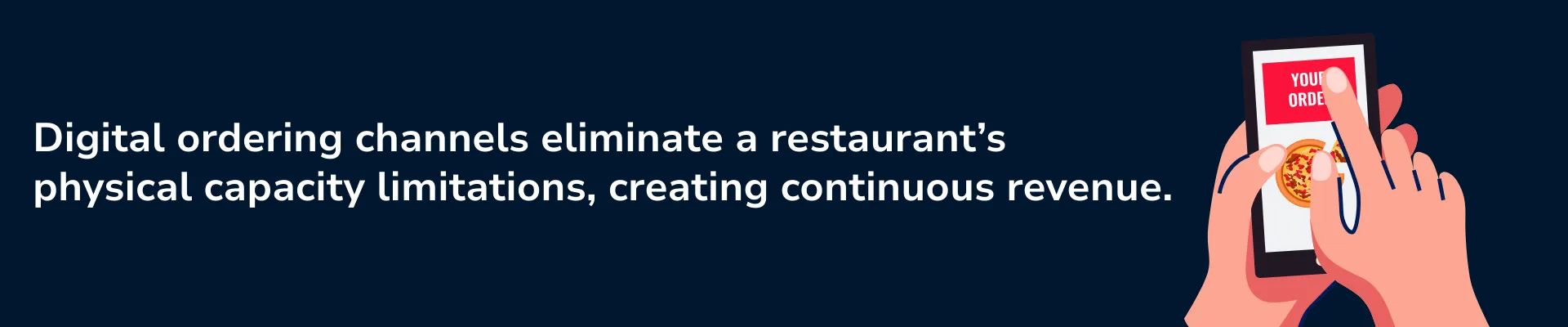
2. Expanding Delivery and Takeout Volume via Digital Channels
Restaurant table traffic may flow one day and be stagnant the next, but when the digital order flow is open, the business remains independent of physical capacity.
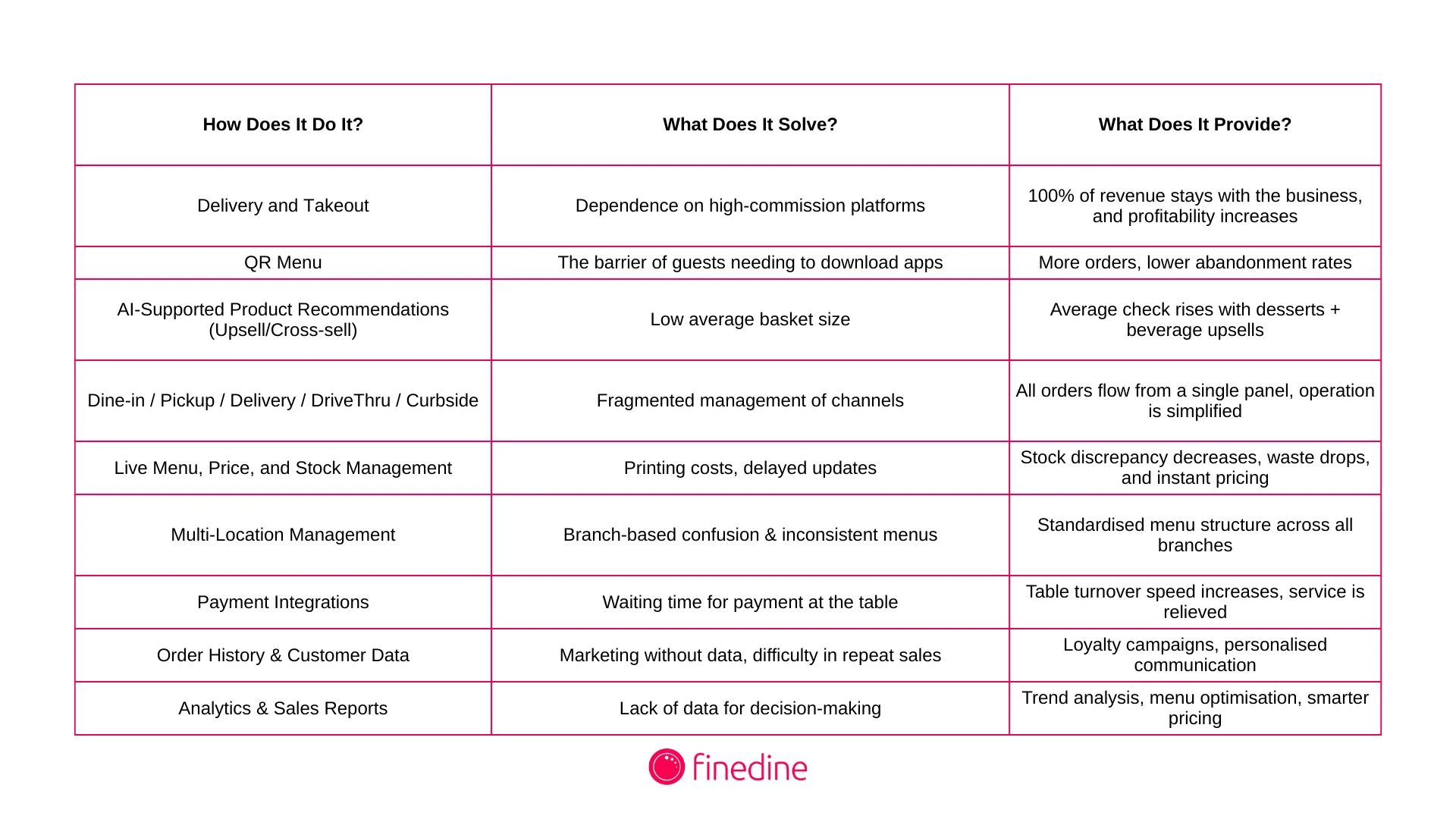
Commission-free online ordering and takeaway infrastructures allow restaurants to diversify their revenue streams, make independent sales, and establish direct relationships with customers.
Moreover, ordering via a simple menu link without the obligation to download any app is now a standard expectation for today's consumer.
Having delivery, pickup, drive-thru, and curbside options work on a single platform opens a door suitable for every customer type.
A guest can create an order before coming to the restaurant, plan a pickup while on the way, or leave their address by paying for delivery. This flexibility means more orders and less operational burden for both table-service businesses and restaurants with strong delivery networks.
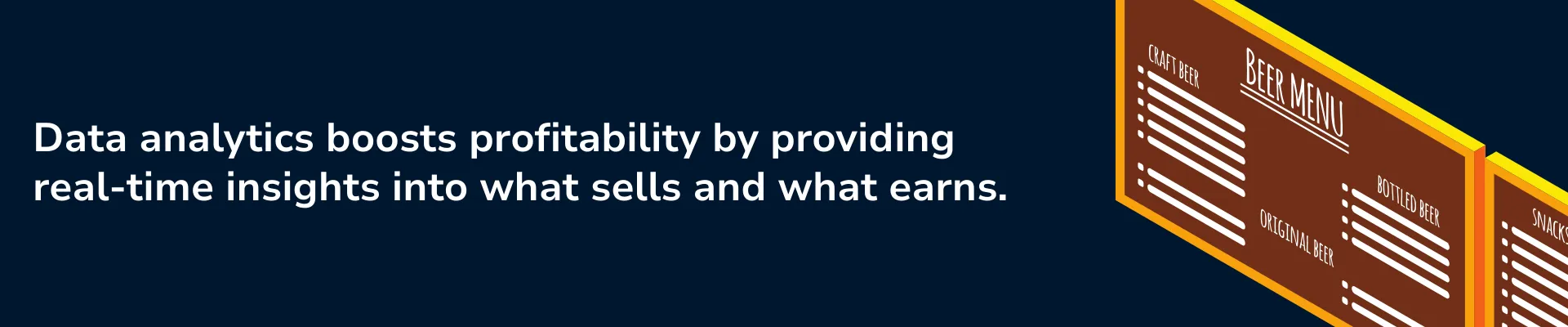
3. Data-Driven Restaurant Management: What Sells, What Earns, What is Unnecessary?
The real power of the online order flow reveals itself in data. When it is seen which product sells more and when via the digital menu, kitchen planning becomes more predictable. Optimising preparation times increases delivery satisfaction and reduces return and complaint rates.
AI-based recommendation systems also increase average basket size by intelligently suggesting complementary items such as side dishes, drinks, or desserts.
- Seeing a chocolate dessert recommendation next to a latte selection is a simple action that drives revenue.
The shareable link structure of the digital order menu is another factor that increases visibility. And the most critical point: Order data stays with the business.
When dependence on third-party commission platforms decreases, revenue margins rise. Since customer information stays directly in the business’s safe, future campaigns, loyalty programs, and personalised offers can be planned more powerfully.
In short, a digital order is not just a sales channel; it is a long-term customer accumulation tool.
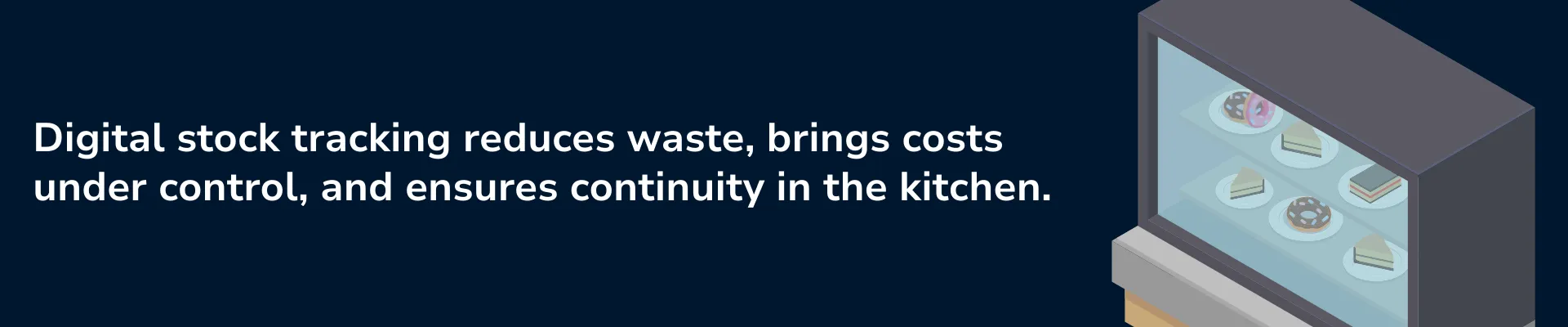
4. Streamlining Restaurant Operations with Stock Management
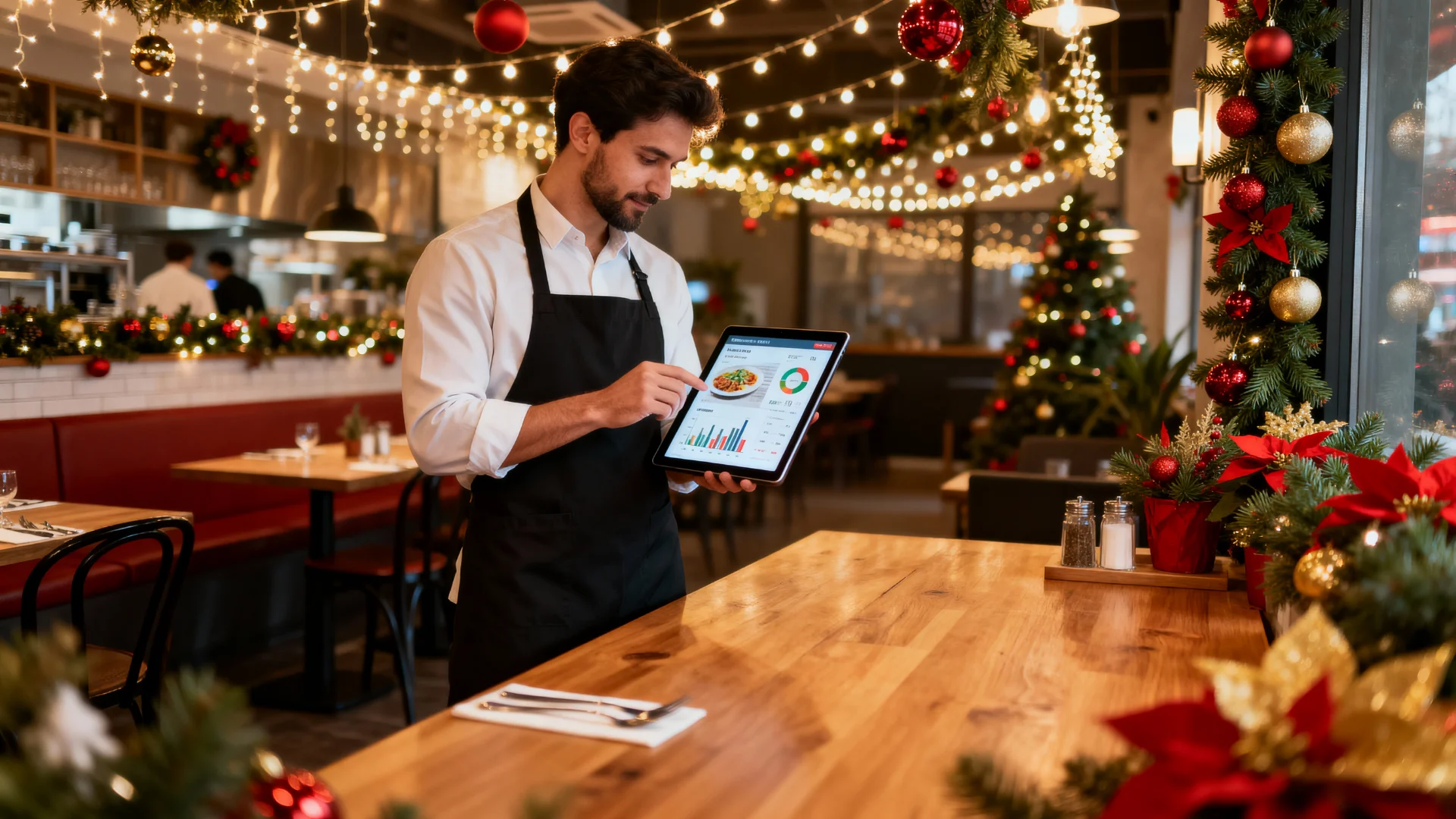
In many restaurants, the biggest profit gains come from preventing waste, not increasing orders. With digital dashboards showing everything from daily sales to cost ratios, kitchen decisions shift from guesswork to clarity.
- Which dish ends up in the trash most often at the end of the day?
- Which product runs out of stock the fastest?
- Should a menu item that’s rarely ordered really stay on the menu?
Once these answers are clear, businesses reduce both material loss and overproduction. Waste rates fall, purchasing becomes more accurate, and automated alerts track stock levels based on real sales volume. Warning kitchens before critical ingredients run out.
This minimises last-minute substitutions and the familiar panic of “the best-selling item is out.” Service continues smoothly, without disruption.
Profitability then grows on two fronts: costs are controlled, and high-margin products are positioned more effectively. With sales trends visible on analytics screens, menu sequencing improves, smart pairings are refined, and the right dishes gain the visibility they deserve.
4. Streamlining Restaurant Operations with Stock Management
In many restaurants, the biggest profit gains come from preventing waste, not increasing orders. With digital dashboards showing everything from daily sales to cost ratios, kitchen decisions shift from guesswork to clarity.
- Which dish ends up in the trash most often at the end of the day?
- Which product runs out of stock the fastest?
- Should a menu item that’s rarely ordered really stay on the menu?
Once these answers are clear, businesses reduce both material loss and overproduction. Waste rates fall, purchasing becomes more accurate, and automated alerts track stock levels based on real sales volume. Warning kitchens before critical ingredients run out.
This minimises last-minute substitutions and the familiar panic of “the best-selling item is out.” Service continues smoothly, without disruption.
Profitability then grows on two fronts: costs are controlled, and high-margin products are positioned more effectively. With sales trends visible on analytics screens, menu sequencing improves, smart pairings are refined, and the right dishes gain the visibility they deserve.
5. Create New Revenue Potential Every Day with a Digital Menu
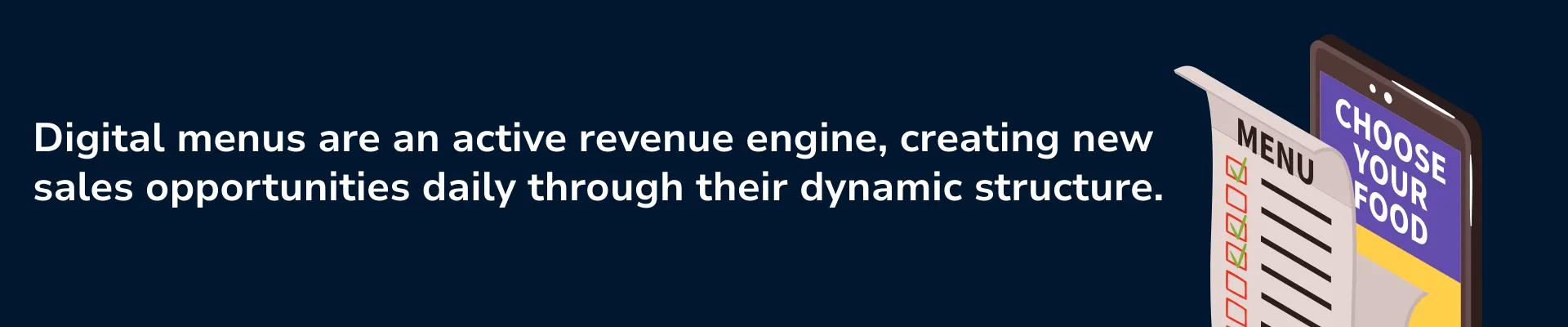
Printed menus cause both cost and time loss in periodic updates. In a digital menu, price revisions, product stock status, adding new visuals, or category arrangements take only a few minutes.
The menu becomes a living organism.
- Highlighting a different campaign during the day's peak hours, a set menu special for evening service, or a premium plate for the weekend becomes possible with a single click.
- While multi-language options increase conversion in tourist areas, allergen-calorie information raises guest confidence.
- With design templates and visual presentation tools, the menu becomes not just informative, but a sales-oriented showcase.
The point that makes the real difference is that the menu is not just a menu, but an active sales engine. AI-supported suggestions offer the most suitable match to the customer; dessert is suggested alongside coffee, fries options are highlighted on the burger screen, and special products are positioned at strategic points.
Thus, campaigns and upsell opportunities are not missed, and the average order value rises naturally.
When opening the menu, examining the product, and moving to order happens with minimum steps for the customer, friction decreases, in-table ordering speed increases, and the abandonment rate in takeout orders drops. In short, the digital menu is no longer just a list, but a dynamic sales channel generating new revenue possibilities every day.
Are Digital Menus at the Heart of Digital Transformation?
In a single sentence: Yes, but the "how" is what matters most.
The thought that technology investments would increase costs occupied the minds of businesses for a long time. However, sector analyses for the 2025–2026 period show that this perception has changed significantly.
In current reports published by Forbes, a decrease in operating costs, an increase in table turnover speed, and a rise in spending rates per customer were observed in businesses integrating digital menus, reservations, and payment systems.
In other words, when the right tools are used, digitization does not mean cost, but on the contrary, direct savings and profitability increases in the short and medium term.
The question in mind is usually this: So, how does digital transformation achieve this? Actually, the answer is quite clear.
- When speed and efficiency combine, service flow accelerates, and with the reduction of manual processes, error and waste rates drop.
- Thanks to the QR menu, there is no re-printing cost for menu changes, and out-of-stock products can be made passive in seconds.
- Data collected by digital processes takes menu management out of intuition and bases it on measurable data, allowing high-margin products to be highlighted.
The flexibility provided by technology offers businesses the advantage of dynamic pricing; determining campaigns, upsell strategies, or product rankings according to meal times is now possible within minutes.
In addition to all this, digitisation is critical not only for operational gain but also for compliance and risk management. In Türkiye, discrepancies between menu prices and POS prices can result in serious fines.
Digital menu–POS integration ensures this alignment automatically, preventing both financial losses and customer dissatisfaction.
2026 is the Right Time to Start Digitisation for Restaurants
From menu design to order management, from delivery to loyalty solutions, every point of the business can be optimised digitally. For the demanding and high-expectation customer of 2026, digitisation is now a must.
FineDine turns this transformation into a smooth, controlled process.
Trend analysis, menu optimisation, smarter pricing
Businesses starting digitisation today will have the power to be not just survivors, but difference-making brands in the competitive environment of 2026.
So, will you step into this transformation? Contact us now, and let's explore the unpredictable restaurant management processes of 2026 together!