More than 80% of diners research a restaurant online before they ever walk through the door. They search on Google, check the website, scroll the menu, read the reviews. The whole process takes three to five minutes — and if your restaurant does not show up during that window, you have already lost them to a competitor who does.
Digital visibility is how easily potential customers can find, evaluate, and choose your restaurant across search engines, maps, social media, review platforms, and your own website. In 2026, it does not matter how great your food is or how prime your location is — if you are invisible online, you are leaving serious revenue on the table.
This guide covers every dimension of restaurant digital visibility: Google ranking, your website, SEO, social media management, review strategy, and online ordering. By the end, you will have a clear, actionable roadmap you can start implementing today.
What Is Restaurant Digital Visibility — and Why Does It Matter So Much?
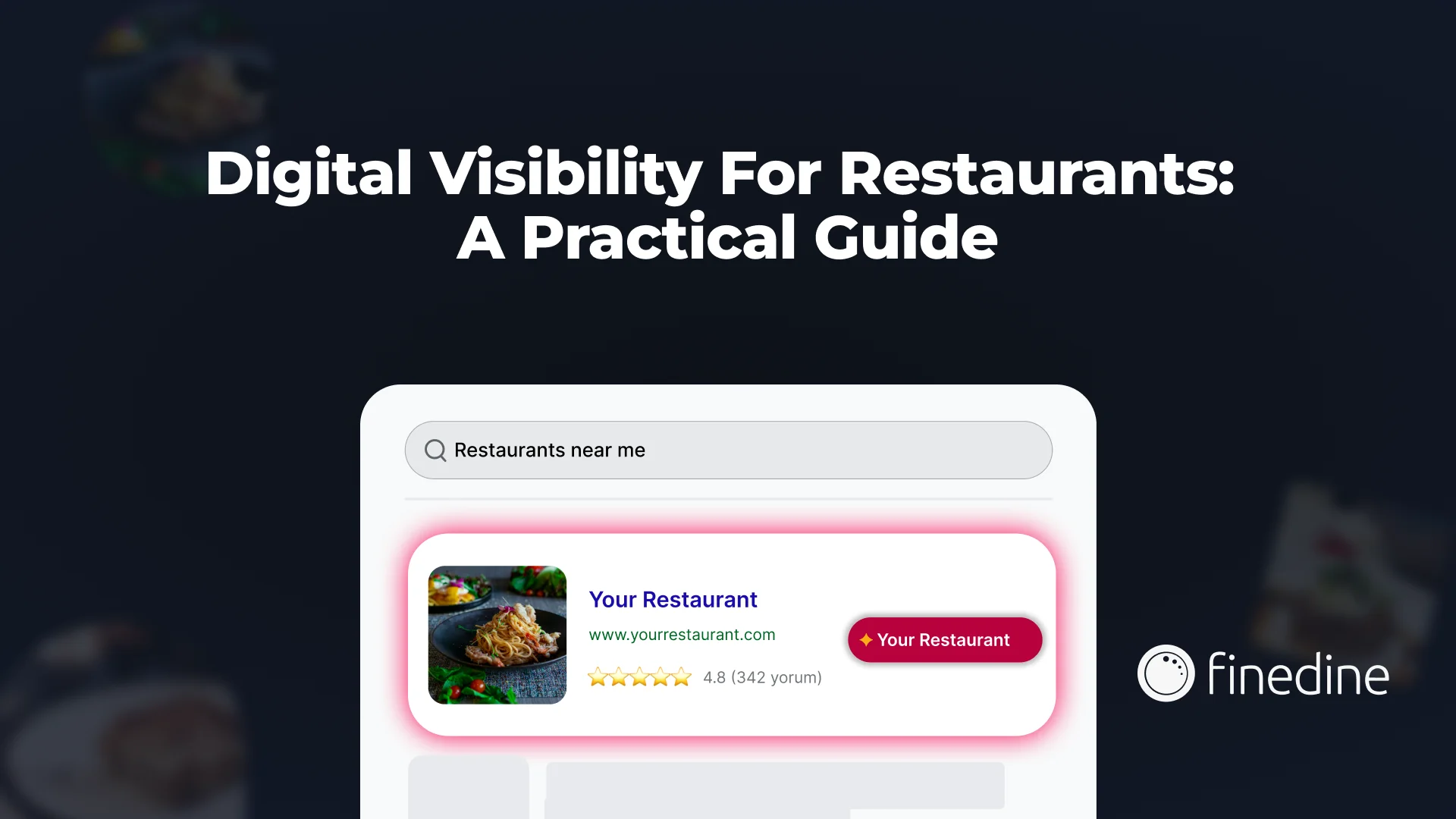
Restaurant digital visibility is your business's discoverability level across the internet. When someone searches "best Italian restaurant near me" or "brunch spots downtown," do they find you? Does your business appear on Google Maps? Do you have a website, and is it up to date? Are you active on social media?
The numbers make the case plainly. Over 80% of diners research online before visiting. Google Search has become the single largest customer acquisition channel for restaurants. And businesses that do not appear on the first page of search results receive almost zero clicks.
Digital visibility is not one channel — it is multiple elements working in concert. Let's go through each one.
Getting Found on Google: SEO and Local Search
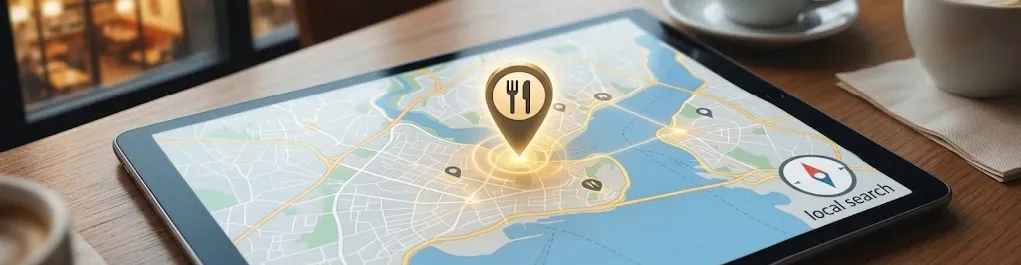
For restaurants, Google is the most critical pillar of digital visibility. The majority of potential customers use Google Search or Google Maps to decide where to eat. Ranking well there directly affects how many seats you fill.
Google Business Profile: Your First and Most Important Step
Your Google Business Profile (formerly Google My Business) controls how your restaurant appears on Google Search and Google Maps. It displays your business name, address, hours, phone number, photos, and customer reviews.
Completing this profile accurately and fully is the baseline requirement for appearing in local searches. Incomplete information, outdated hours, or a profile with no photos significantly lowers your chances of being shown by Google.
What to do: Claim or create your profile. Fill in every field. Add photos regularly. Keep your hours current. Respond to every review — positive and negative alike.
Your Restaurant Website: Your Digital Home Base
Your Google Business Profile gets you onto the map — but your website is where visitors decide whether to come in. They browse the menu, get a feel for the atmosphere, compare prices, and ultimately make the call: "Let's go here."
A restaurant without a website faces a serious credibility gap in 2026. Guests think, "They don't even have a website?" and move on to the next option. And Google itself tends to rank businesses with websites higher in search results.
What should a restaurant website include? A current menu, location and contact details, hours, photos, and ideally online reservations or ordering. Mobile compatibility is non-negotiable — over 70% of searches happen on mobile devices.
FineDine's Website Builder was built exactly for this need. Connect your Google Business Profile and your restaurant information, customer reviews, and photos automatically populate your site. No coding required, no designer needed. Use the "Build with Command" feature to describe what you want to an AI, and it creates the design for you. Every update you make in Menu Manager reflects on your website instantly — your menu, prices, and items stay consistent everywhere.
SEO: Climbing to the Top of Search Results
SEO (Search Engine Optimization) is the work you do to help your website rank higher on Google. For restaurants, the most important dimensions are:
Local SEO: To appear for location-based searches like "seafood restaurant in Brooklyn" or "rooftop bars in Austin," your website needs clear location information, a complete Google Business Profile, and consistent listings across local directories (TripAdvisor, Yelp, Foursquare).
Page speed: Slow websites hurt your Google ranking and drive visitors away. If your restaurant site takes more than three seconds to load, roughly half of potential visitors will abandon it before it opens.
Mobile optimization: Google demotes websites that are not mobile-friendly. Your site must look good and work well on every screen size.
Content: Blog posts, menu descriptions, and the copy on your pages help Google understand which searches to show your restaurant for. If you want to appear for "fine dining in Chicago" or "vegan menu Nashville," your website needs relevant content on those topics.
Getting Found by AI: The New Frontier of Restaurant SEO
Ranking on Google is no longer enough on its own. Diners increasingly ask AI tools — ChatGPT, Perplexity, Google AI Overviews — direct questions: "Where's the best brunch in Brooklyn?", "Restaurants with gluten-free menus," "Romantic dinner ideas in London." These tools generate answers by pulling from websites and online content.
For your restaurant to appear in AI-generated responses, your website and digital content need specific qualities:
Clear, descriptive content. AI tools draw from direct, specific language. Sections like "Who We Are," "Our Menu," and "Our Concept" should describe your restaurant precisely. "Waterfront Italian restaurant in Williamsburg" is the kind of concrete phrase that both Google and AI tools can work with.
Question-and-answer formatted content. Use question-format headings in your blog posts and FAQ section: "What type of cuisine do we serve?", "Do you accommodate dietary restrictions?", "How do I make a reservation?" AI tools pull answers from this structure and are more likely to cite your restaurant as a source.
Accurate, current information. AI tools favor up-to-date sources. Your menu, hours, prices, and contact details must always be current. Stale information erodes trust with both AI systems and the guests who find you through them.
Structured data. When your website presents information like restaurant name, address, hours, cuisine type, and price range in an organized, structured format, it is easier for both search engines and AI tools to read and use.
FineDine's Website Builder automatically handles most of these requirements. Your Google Business Profile data, menu, and customer reviews are pulled in structured and current — giving you a digital presence optimized for both traditional search and AI discovery.

Social Media: Your Visual Storefront
Instagram, TikTok, and Facebook are the most powerful visual marketing channels available to restaurants. People looking for somewhere to eat scroll through images, browse menus, and read other guests' experiences on social media before making a decision.
Consistent, Professional Visual Quality
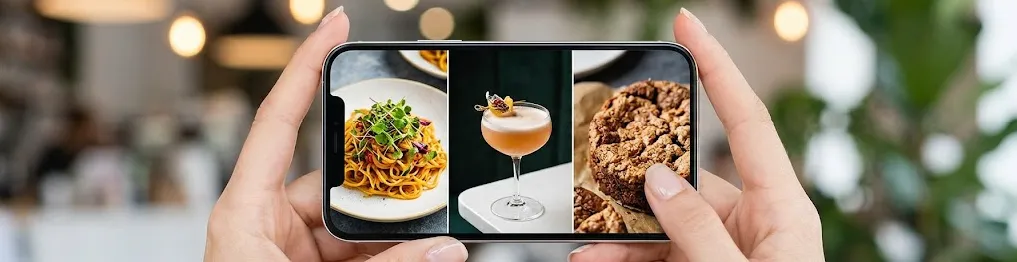
The quality of what you post on social media shapes your brand perception directly. Blurry, dark, or careless food photos make people question the quality of your restaurant. Polished, professional-looking images create the "I need to go here" feeling.
Hiring a professional photographer for every post is neither practical nor affordable. FineDine's AI Media Studio solves this. Upload a quick photo you snapped in the kitchen, and the AI transforms it into a professional-quality image in seconds. Or generate visuals from scratch based on your dish descriptions. Use these images across your menu, website, and social channels for a consistently high-quality, on-brand look everywhere.
Regular Posting and Genuine Engagement
Staying visible on social media requires consistency. Posting three to four times a week — plus stories and short-form videos — keeps the algorithm working in your favor. Content ideas: daily specials, behind-the-scenes kitchen moments, the chef plating a dish, customer testimonials, seasonal menu changes, and team introductions.
Engagement matters as much as posting frequency. Reply to comments, respond to messages, and re-share posts where customers tag you. Social media is not a one-way advertising channel — it is a two-way relationship.
Online Review Management: Your Digital Reputation
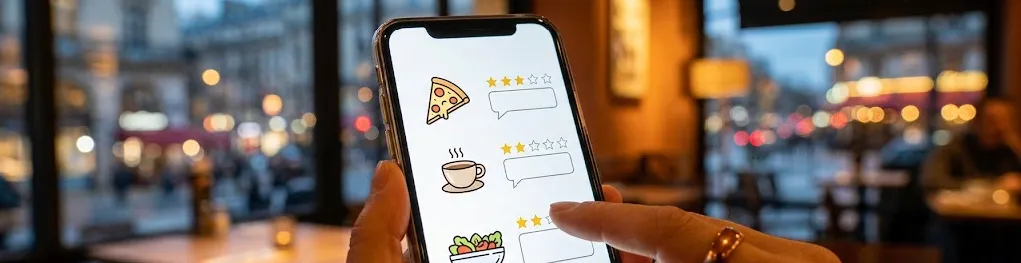
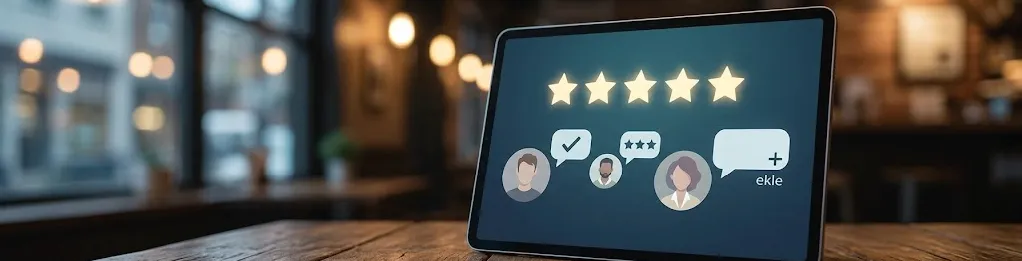
Reviews on Google, TripAdvisor, Yelp, and food platforms directly influence whether potential guests choose you. Research consistently shows that over 90% of consumers check online reviews before selecting a restaurant.
Review management is not passive — it requires active attention. Thank guests for positive reviews. Respond to negative ones professionally and constructively, with a focus on resolution. Encourage satisfied guests to leave a review — placing a QR code on the table makes this frictionless.
When you connect your Google Business Profile through FineDine's Website Builder, your customer reviews and ratings automatically appear on your website. This social proof builds trust with every new visitor before they even walk in the door.
Online Ordering and Reservations: The Revenue Side of Digital Visibility
Digital visibility is not just about being found — it is about converting that discovery into revenue. Finding you is not enough; the guest needs to be able to order or book a table immediately.
Offering online ordering and reservations on your website significantly increases your conversion rate. A guest browsed your menu, liked what they saw, and wants to order right now — but if they have to call and wait, there is a good chance they will go to a competitor who makes it easier.
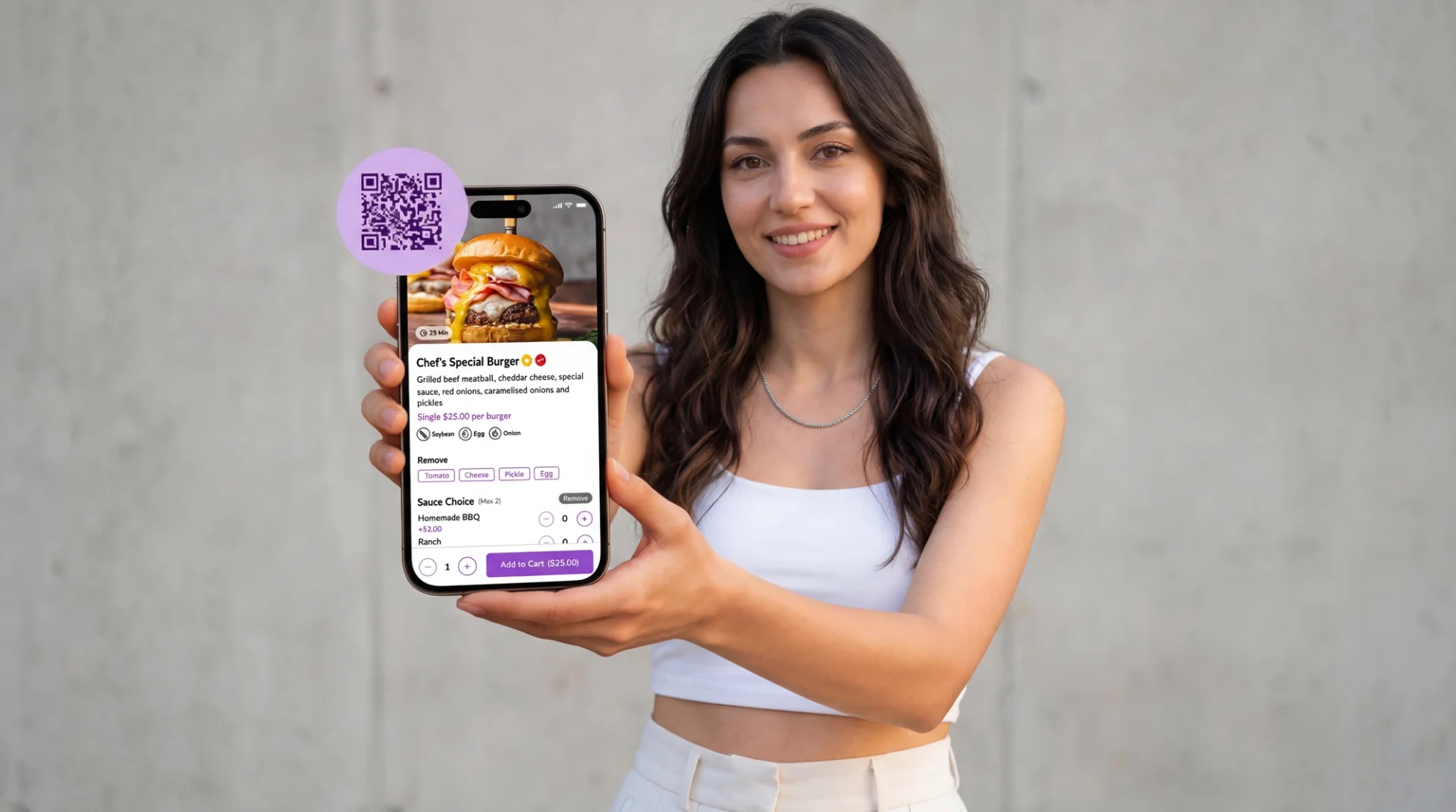
FineDine's ecosystem handles this end-to-end. Your digital menu built in Menu Manager, your website, and your online ordering page all work together. A guest finds you on Google, browses the menu on your site, places an order or scans the QR code at their table — all in one seamless flow.
Step-by-Step: Your Restaurant Digital Visibility Strategy
Put it all together, and your restaurant's digital visibility strategy looks like this:
Build and optimize your Google Business Profile. Complete every field, add photos, respond to reviews.
Launch a professional website. Use FineDine's Website Builder to connect your Google Business Profile and go live with a mobile-ready restaurant website in minutes.
Create your digital menu and keep it current. Use FineDine Menu Manager to manage your QR menu and website from one dashboard. Push price and item changes instantly.
Elevate your visuals. Use FineDine AI Media Studio to enhance food photos or generate new ones. Maintain consistent visual quality across every channel.
Post regularly on social media. Three to four posts per week, with a focus on visual quality and genuine engagement.
Manage reviews actively. Respond to every review on every platform. Make it easy for happy guests to leave one.
Enable online ordering and reservations. Let guests take action the moment they find you.
Measure and improve. Use Google Analytics, Google Business Profile insights, and social media data to track performance and refine your strategy.
Final Thought: Digital Visibility Is No Longer Optional
No matter how exceptional your food is, digital visibility is what determines whether potential guests find you at all. A restaurant that cannot be found on Google, has no website, and is absent from social media is operating at a serious competitive disadvantage in 2026.
The good news: building a strong digital presence is no longer expensive or complicated. With the right tools, you can establish a professional, discoverable online identity in a matter of days.
FineDine brings all of these tools together in one platform. Launch a professional restaurant website in minutes with Website Builder. Create and manage your digital menu across every channel with Menu Manager. Elevate your food photography instantly with AI Media Studio. Everything is integrated. Everything is managed from one dashboard.
Start your digital transformation today. Your future guests are already searching for you — make sure they can find you.
Ready to boost your restaurant's digital visibility? Try FineDine free for 14 days.