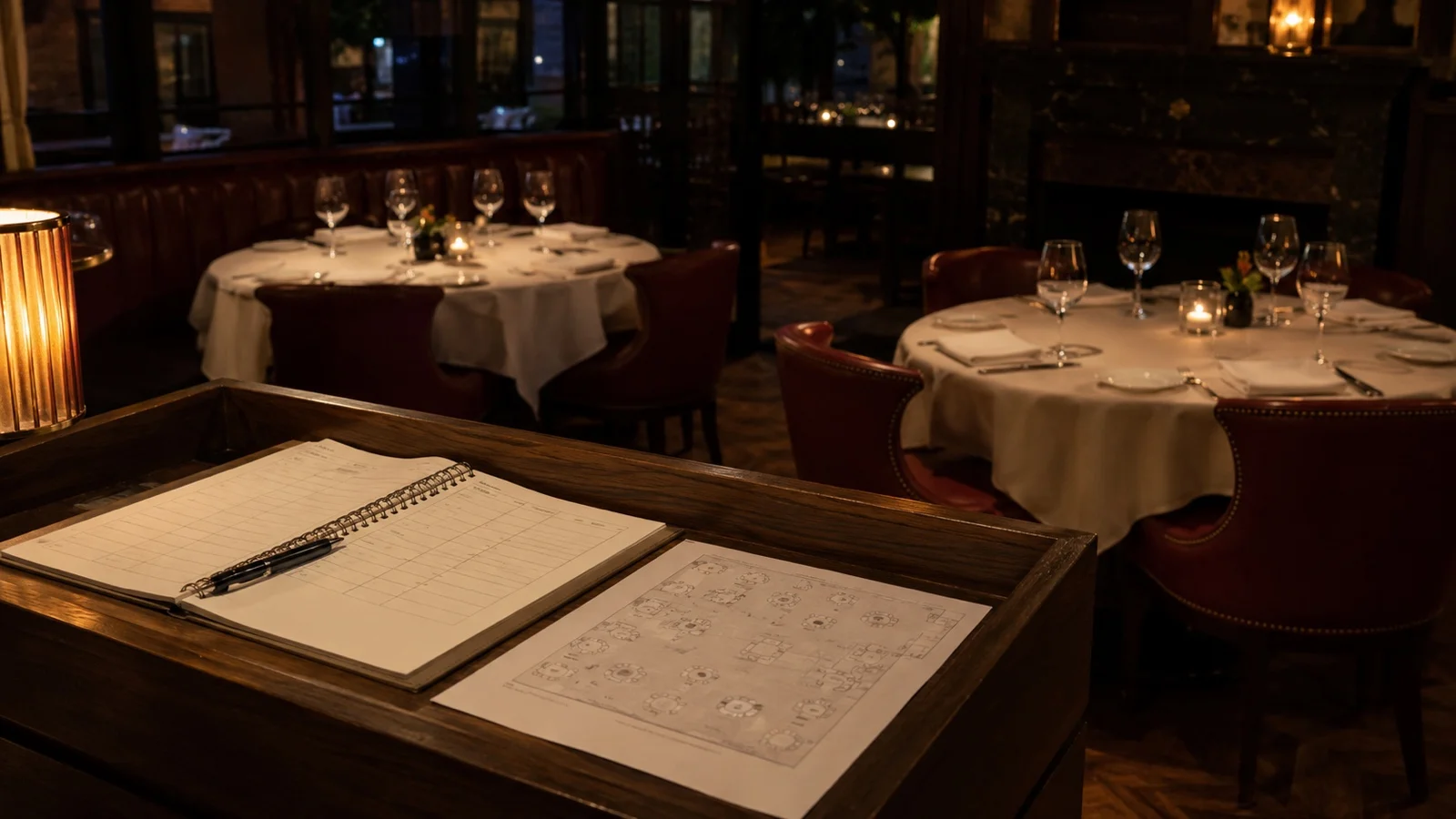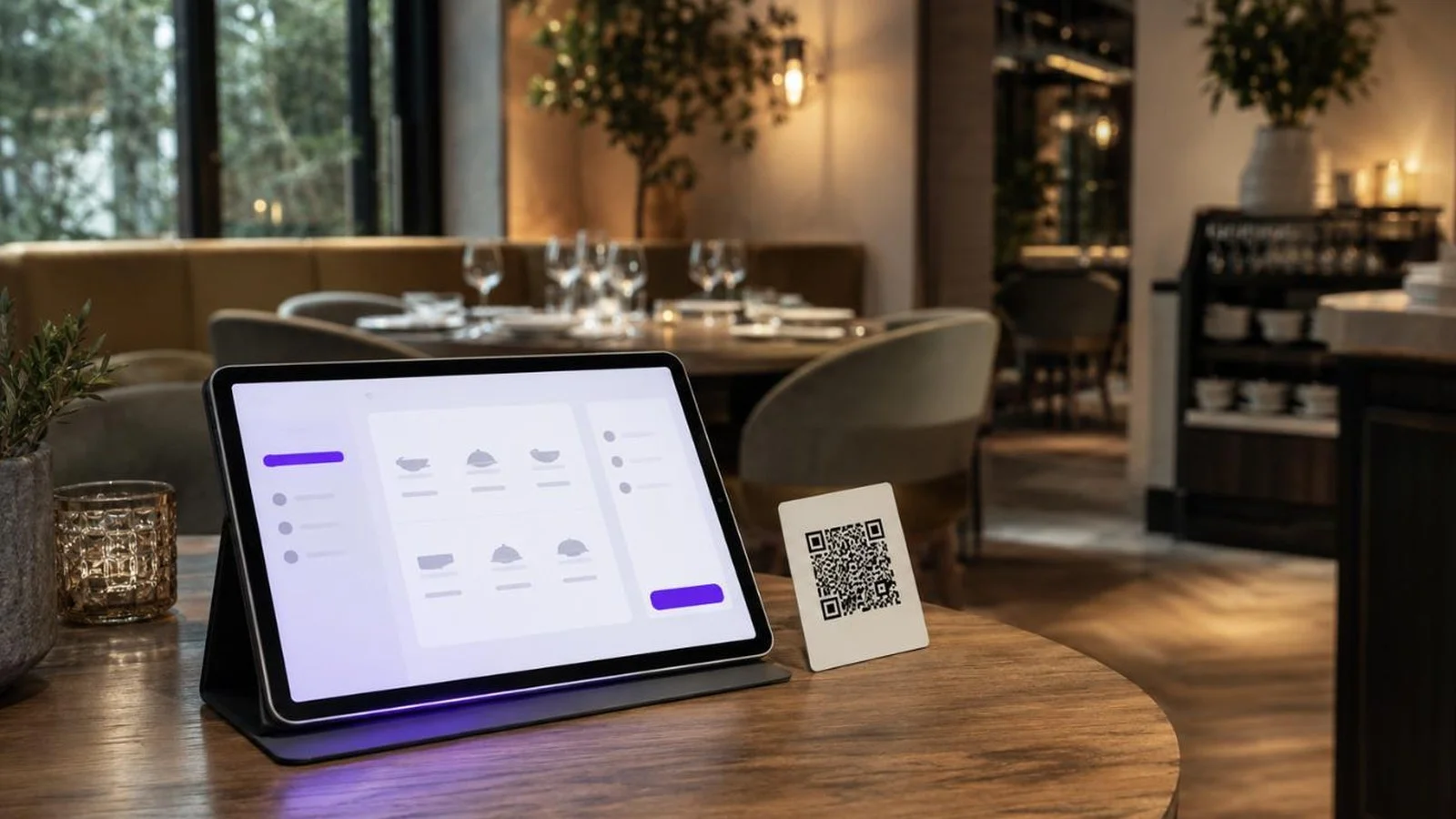

A booking rarely arrives at a convenient moment. The phone rings in the middle of service, someone writes a name and a time on whatever paper is closest, and two hours later nobody is sure whether that party was four people or six. Streamlining reservations comes down to three decisions you make once instead of every night: every booking lands in the same list, each entry carries enough detail to seat the party without a second call, and every table is held for a length of time you set in advance. Deposits, reminders and marketplace listings all sit on top of those three, and none of them fix a book that lives in three places.
What a Booking Has to Carry
Take the last ten bookings you accepted and ask whether you could seat every one of them without calling anyone back. The gaps show up quickly. A party size written down as "about five". A phone number that belongs to whoever made the booking rather than whoever will walk in. A nut allergy that stayed in the head of the person who answered.
A booking you can act on carries the same fields every time: a name and a number you can reach during service, the party size as an actual number, the time, the length of time you are holding the table, the channel it came through, and anything the guest volunteered.
That last field is the one that goes missing. Allergies, a wheelchair, a high chair, a birthday cake, a table away from the door: guests remember these, and they travel badly between the person who took the call and the person who runs the door.
Party size and hold time do a different job. Together they tell you whether you are full. Twelve reservations in the book means nothing until you know whether it is twelve parties of two spread across a four-hour service, or twelve parties of six inside the same ninety minutes.
Where the Bookings Come From
Most restaurants take bookings through more channels than they would list if you asked. The phone is one. So are the message that came in on Instagram at midnight, the guest who stops at the door on the way past, the marketplace listing someone set up two years ago, and the booking button on your own site.
Each channel hands you a different amount of information and leaves a different amount of work behind.
The marketplace row is the one that gets argued about. A listing brings you people who were not looking for you by name, and in exchange the relationship starts on someone else's platform: they hold the contact details, they send the confirmation, and they decide what the guest sees next. If you already weigh that trade on the ordering side, our guide to online ordering for restaurants works through the same decision there.
If you run F&B inside a hotel, bookings also arrive through reception and through guests already in the building, and putting a hotel's services behind one QR menu covers how those surfaces fit together.
Whatever mix you keep, the requirement is the same. Keep the channels you can actually answer during service, and make every one of them write into a single list. A second list is where double bookings start.
How Long You Hold the Table
Dining duration is the setting most books get wrong, because it usually arrives as a default instead of a measurement. Ninety minutes is a common one, and it stays a guess until you check it against your own service.
Measuring it takes a week and a notebook:
1. For every table, write down the time the party sat and the time the table was cleared and ready for the next guests.
2. Keep the party size next to it, and mark which service it was.
3. At the end of the week, group the times by party size and read the middle value in each group.
Start with the median. A handful of tables that stayed three hours will pull an average upward, and a hold time built on that average fits almost nobody.
Two other things come out of that week. Deuces at lunch usually clear faster than large parties on a Saturday, so a single duration for the whole book leaves seats empty at one end and rushes guests at the other. And the gap between bookings is real work: clearing, wiping, resetting, seating. If your book runs back to back with no gap, one party arriving fifteen minutes late pushes the rest of the evening.
One limit is worth saying out loud. If the kitchen cannot keep pace at full capacity, a shorter hold time moves the wait rather than removing it: guests get seated sooner and then wait for their food.
No-shows, Reminders and Deposits
No-shows are the reason most operators start looking at reservation software, and the first fixes are the dull ones. A confirmation when the booking is made. A reminder before the service with the time and the party size in it, so a mistake surfaces while you can still fix it. And a cancellation that takes one tap.
That last one reads backwards until you count tables. A guest who can cancel in a tap hands back a table you can still sell. When cancelling means phoning during your busiest hour, some of those tables come back to you as no-shows instead.
Deposits and card holds are the heavier tool, and they tend to be used where an empty table costs most: large parties, tasting menus, peak weekend slots, public holidays. Before applying one across the whole book, write down the booking volume and no-show rate you have now, turn deposits on for a single slot or a single party size, and compare the same two numbers over a stretch of services that covers both quiet and busy nights. A deposit changes who books as well as who shows up, and the size of that effect is not the same in a neighborhood bistro and a destination restaurant.
From the Book to the Floor
A booking is a document until someone at the door turns it into a seated table. Detail gets lost in that handover for a plain reason: the person on the door was not on the call.
During service the book has to be visible to whoever is running the floor, on the screen they actually have in their hand, and it has to show status as well as time. Booked, arrived, seated, running late. A list that shows only times tells you nothing at 8:40 about the 8:30 that has not walked in.
Allergy notes need a second destination. A note that reaches the host and stops there gets discovered when the plate is already on the pass.
Once the party is seated, the reservation stops being the point and the service takes over. If your guests order or settle up from their phones at the table, what QR payment changes during service covers that end of the meal.
What to Look At After a Month
Give it a month before you judge any of this, and pick a stretch that covers several weekday and weekend services. If your volume is low, collect for longer.
Four numbers, each answering a different question:
- Reservations taken shows how much demand your channels captured.
- Covers booked, meaning seats, shows how much of the room was spoken for.
- No-show rate, split by channel and by time slot, shows where the losses sit. The split is the useful part, because a rate that looks tolerable across the month can sit almost entirely inside one service.
- Booking lead time, meaning how far ahead people book, tells you how far ahead to open the book and when a reminder is still early enough to matter.
None of these stands in for another. Reservations and covers answer separate questions, and reading only the first hides the Saturday where twenty bookings of two filled a room laid out for parties of six.
Setting Reservations Up in FineDine
In FineDine, reservations sit next to orders in the same panel, and the setup comes down to four decisions.
**Which tables you are seating.** FineDine lets you keep table and area information in one place, so indoor, terrace and the upstairs room stay separate rather than collapsing into one flat list of table numbers. Those same tables carry your dine-in QR codes, so the floor you take bookings against is the floor your team already works with.
**How long a table is held.** You set dining durations per service and per party size, which is where the week of measuring pays off.
**What the guest can tell you.** Guest notes and requests arrive on the booking record, so the allergy or the high chair is on the entry your host opens at the door. Confirmation emails go out with the booking, and SMS alerts are available on top of them.
**Whether you take a deposit.** Pre-payment collection is part of the reservation settings, so a deposit on a large party runs through the booking the guest already started. Reservation limits and the availability of pre-payment differ between plans, so check the current pricing before you promise a policy to your team.
Reservation reporting sits with your order and menu numbers, which keeps the month-long check on one screen.
None of this decides whether you accept an eight-top at 8pm on your busiest Saturday. That call stays on the floor. To see how the pieces map onto your own areas, your busiest services and the channels you take bookings through today, you can request a FineDine demo.
| Channel | What usually arrives with it | What you do so it lands in one list |
|---|---|---|
| Phone during service | A name, a time, and a party size if you ask for it | Enter it into the system before the call ends |
| Your own booking page | The full record, filled in by the guest | Nothing, as long as the page writes into the list your host reads |
| Instagram or WhatsApp message | A time and a first name, rarely a party size | Reply asking for the missing fields, then enter it yourself |
| Reservation marketplace | A complete record, held on their platform | Check whether it syncs into your list or has to be copied across |
| Walk-in at the door | Nothing until someone writes it down | A waitlist entry with arrival time and party size |
Frequently Asked Questions
- A guest asks for a specific table when they book. Should we promise it?
- Treat it as a request, write it on the booking, and confirm the table only if you can hold it for that slot. A window table still occupied at 8pm costs more goodwill than an honest "we will do our best" at the time of booking.
- Do we still need a waitlist if we take reservations?
- Unless you seat by booking only, yes. Walk-ins fill the gaps that cancellations and short parties leave, and a written waitlist with arrival time and party size lets you quote a wait you can defend at the door.
- How far ahead should we open the book?
- Far enough to catch your own typical lead time, which you can read off your existing bookings. Opening a year ahead mostly creates bookings people forget; opening two days ahead loses the group planning a birthday.
- We run a cafe with fast turnover. Are reservations worth it?
- Often not for the whole room. Counter service and short stays usually work better with a waitlist plus a few bookable tables for larger groups, since holding a two-top for a 3pm booking costs you the walk-ins who would have used it three times.
- What do we do when a party arrives late?
- Decide the grace period before service and tell guests at the time of booking. A party arriving inside the window keeps the full hold time; past it, they get what is left of it or the next table that frees up.