Restaurant table management starts with being able to follow which tables are free, which are held for a booking and who is waiting at the door during service. How many people a table seats and which section it sits in are part of the same picture. Turn time is a planning figure added on top of all that.
What a Room Needs to Know About Its Tables
Keeping the following current during service is the base the rest sits on. When one of them falls behind, the answer given at the door turns into a guess.
- Status: free, seated, finishing, held for a booking, or waiting to be cleared.
- Capacity: how many people the table seats, and the smallest party it makes sense to give it to.
- Section: which part of the room the table sits in, since a full terrace and a quiet back room are two different situations.
- The queue: who is waiting, since when, and for what size of table.
- What is coming: the next booking on that table, and how much time is left before it arrives.
Turn time is the number that lets you plan with all of this. It is one part of table management, not the whole of it.
Where Wait Times Usually Come From
Waiting is not always caused by the number of tables. In these situations a queue can build up while tables sit empty:
- A table is free and the room does not know yet. The party has left, the table has not been marked clear, and the host is still quoting a wait.
- Turn time has never been measured, so the wait given at the door rests on an estimate rather than a number.
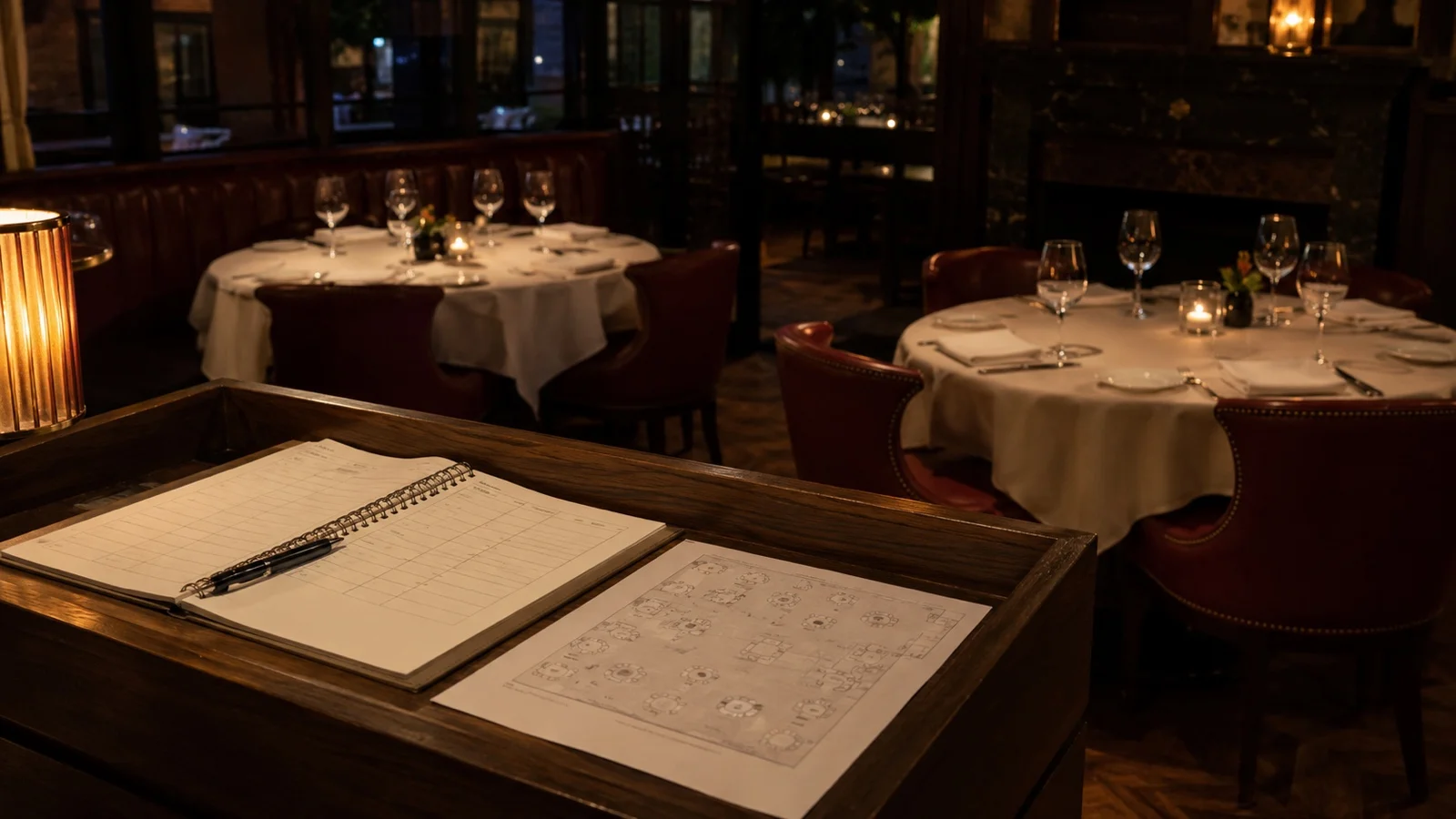
- Bookings and walk-ins are tracked in two places. A book on the host stand and a screen behind it can disagree during the busiest hour of the service.
If the problem is not seeing the state of the tables you already have, adding more of them may not fix the waiting.
Working Out Your Own Turn Time
A number borrowed from another restaurant sets a pace your menu and service model may not hold. You can take a first estimate from a few representative services and update it as data builds up.
- For a few services, write down when a party is seated and when the table is clear again. Keep peak and off-peak separate.
- Split the list by party size. A two-top and a six-top behave differently in the same room.
- Start with the median. A few long tables can pull the average up, so early on the median tends to describe a typical table better.
You can then use that figure when setting booking intervals, quoting waits at the door and deciding which section a large party goes to.
Decisions to Make When Setting Up the Floor Plan
A drawing shows where the tables are. What the room can actually do with them is decided by the choices below.
| Decision | Why it matters |
|---|---|
| How the room is divided into sections | Lets you see that one area is full while the other still has free tables. |
| Guest range per table | Stops a large party being seated at a small table during a rush. |
| How long a booking holds a table | Determines whether two bookings placed back to back on the same table will collide. |
| Whether an order carries its table | Changes whether the team has to ask which table an order belongs to. |
The Table Is Ready and the Next Booking Has Arrived
This is the moment table management exists for, and it goes better when the rules are set while the room is quiet.
- How long a booking is held. There is no single right length here; what matters is setting the rule in advance and applying it consistently.
- How much buffer sits between two bookings on the same table. This is where your measured turn time is used, rather than the default in the software.
- What happens with no-shows. A confirmation message the day before, a note on the booking, or a deposit on high-demand services: each adds a different amount of friction. Which one fits depends on how full you run, how often no-shows happen and the service model.
Before the Floor Plan: What to Set Up
In FineDine, most of what people expect from a floor plan is decided during setup rather than in the drawing.
The area layout: the room is divided into areas first, and tables are created inside them, each with a minimum and maximum guest count. That is what keeps a terrace and an indoor section separate at the moment a party is being seated.
Time: for rooms that take bookings, a dining duration can be set. Reservations are then planned around the duration you set rather than a fixed assumption.
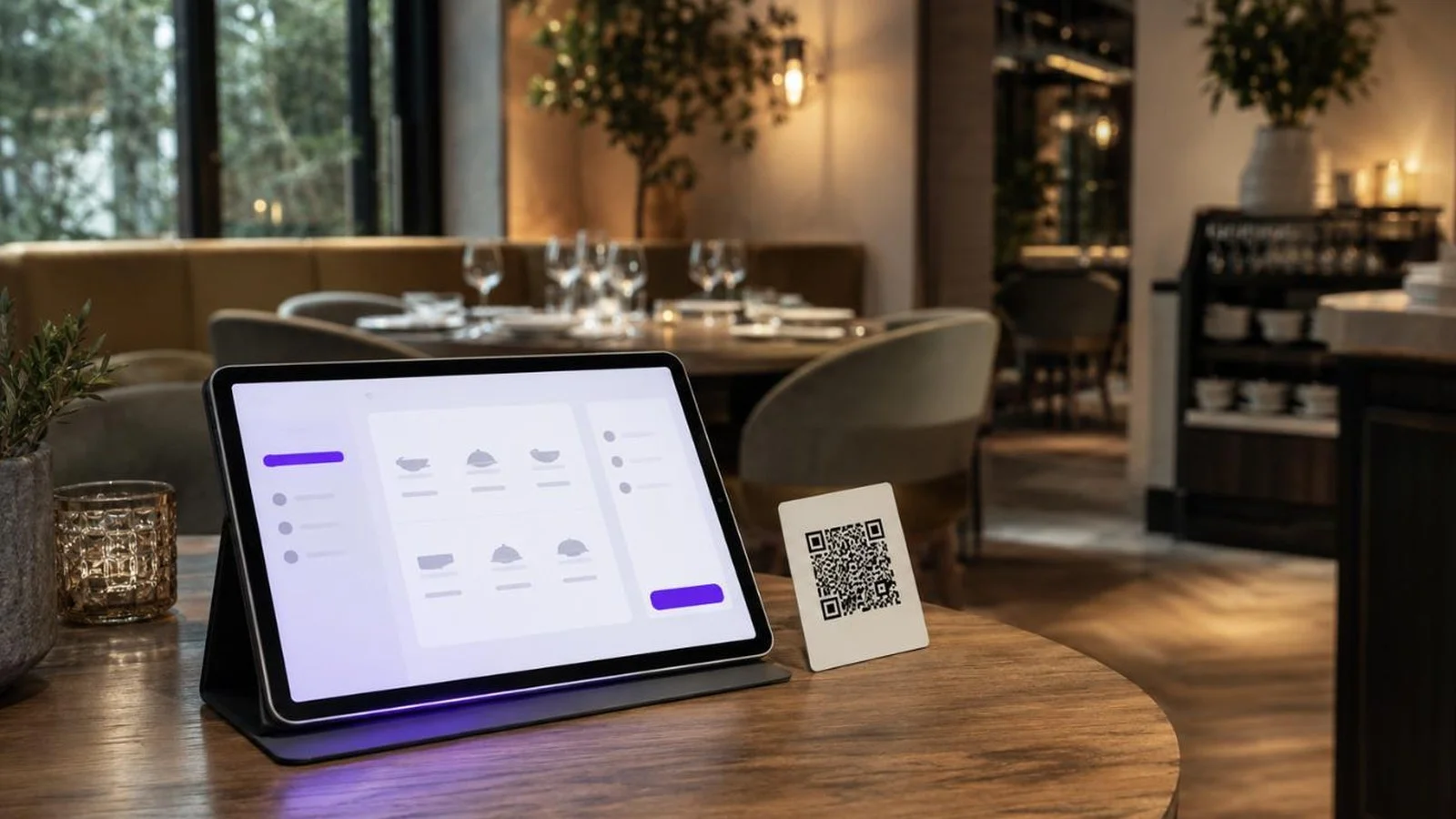
How the table is attached to the order: with a code per table the table can be attached to the order automatically, while a single code for the room means that detail has to be collected another way. The same setup is what lets a guest send a service request from the table.
What Software Does Not Solve
Some decisions still sit with the team.
- Seating software does not add capacity to the kitchen. If the kitchen cannot keep up with a faster pace, the bottleneck can move from the floor to the pass, and a shorter wait for a table becomes a longer wait for food.
- When a party stays longer than expected, how to approach it is still a service decision. The screen shows the situation; going over to talk is the team's job.
- At peak, the host stand still needs a person. The screen makes the table status clear; exceptions such as how long a particular party can be kept waiting are still handled by the team.
It is also worth checking how many tables and reservations a plan covers before building a process around a feature.
Frequently asked questions
- Do I need a reservation system to manage tables?
- No. A room that only takes walk-ins still needs sections, table capacities and a clear view of what is free. A reservation system adds the ability to plan the next seating on top of that, which is why it tends to matter most where dining duration is predictable.
- Can one QR code serve the whole room?
- It can, and it is simpler to print and replace. What you lose is the automatic part: unlike a code per table, the table does not come with the order and has to be collected during ordering.
- How does a venue with a terrace and an indoor room set this up?
- As separate areas, with tables created inside each one. Keeping them separate is what shows that the terrace is full while the back room is empty, which is usually when a seating decision is made.
- What is a realistic target for table turnover?
- The useful target comes from your own measurement rather than a benchmark. Time seat-to-clear across a few services, split it by party size, take the median, and revisit it as more weeks come in.
- Does faster turnover hurt the guest experience?
- Pushing a party to leave earlier can damage the experience. The effect is smaller when the time saved comes from unnecessary waiting: waiting to order, waiting for the bill, or waiting for a table to be cleared.
Seeing Table Status, Bookings and Orders in One Place
FineDine keeps these parts connected: room areas and table capacities, bookings planned around the dining duration you set, and orders linked to the table they came from. To see how it could be set up around your current table layout, peak hours and reservation flow, you can request a FineDine demo.