
A restaurant manager's day runs in three stretches. Before service there are checks, prep and the briefing. During service you steer the whole room instead of working one station. After the last table there is money to reconcile, closing checks to sign, tomorrow's order to place and a handover to write. Rosters, supplier calls, stock counts, hiring, training, invoices and reporting sit outside that flow and need their own time in the week.
That is what day-to-day restaurant operations means in practice: the recurring work of keeping a venue open, plus the weekly layer that keeps it supplied and staffed. Below is what each stretch contains, a pre-service check you can run at tomorrow's service, two ways to divide the day when there is an assistant manager, and a quick count that shows where the interruptions come from.
What Gets Done Before Service

The order below matters, because each step changes the next.
- Walk the room from the front door, the way a guest comes in. Sightlines, table levels, temperature and lighting read differently from the entrance than from the pass.
- Get the sold-out list from the kitchen in writing before the briefing. It changes what you push, what you assign and what the floor is allowed to promise.
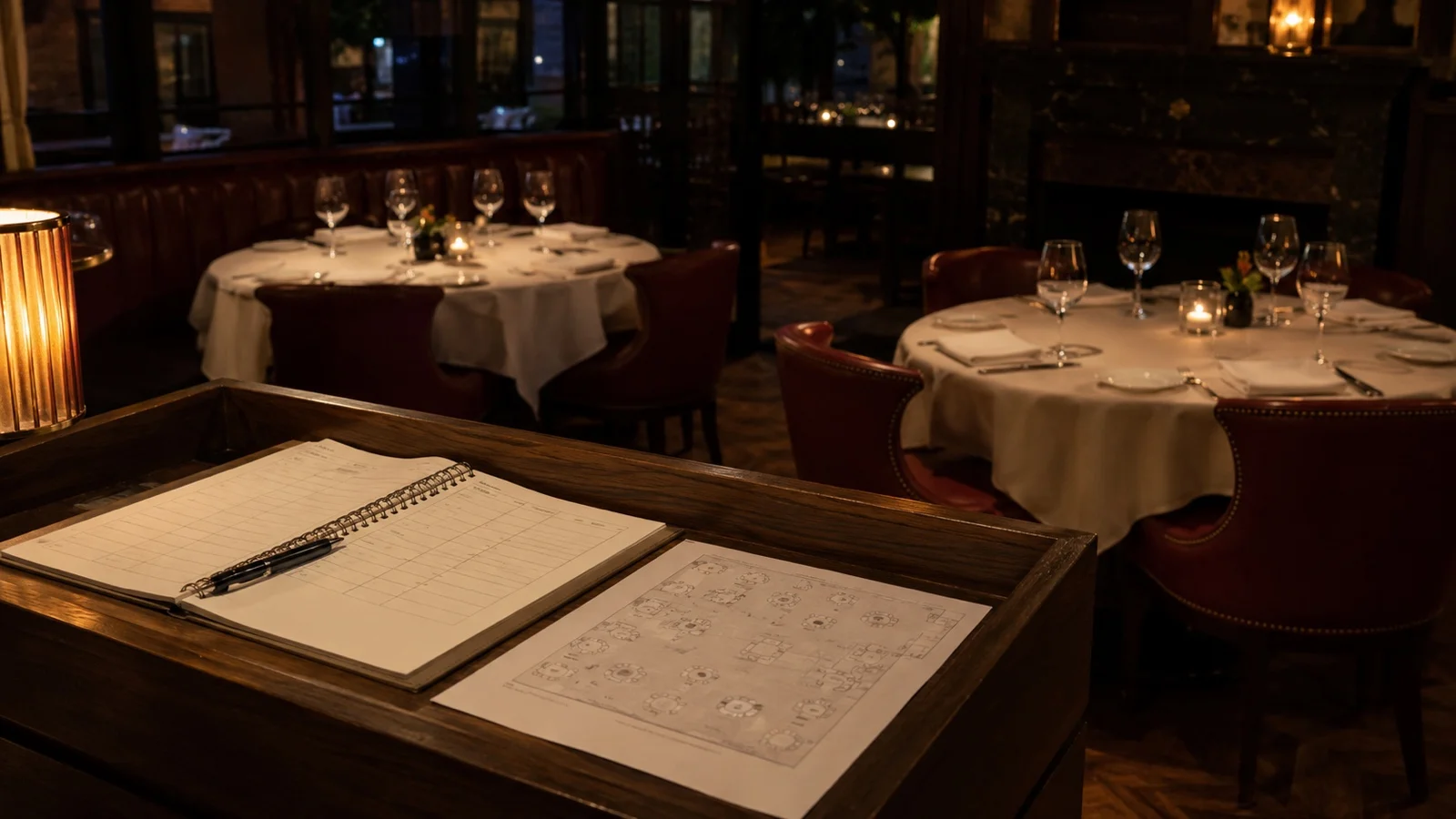
- Read the reservation book before you brief, not after. Group bookings, allergy notes and tables that have to turn early all change how you hand out sections.
- Assign sections out loud, and say who has the door, the bar and the tables nobody wants.
- Name a person for each interruption that repeats: the delivery, the phone, walk-ins during the rush. An interruption with no name on it comes to you.
- Close out one thing left over from the previous service. One item, not the whole list.
Time this block for three services in a row. If it runs long every time, look at the handover from the closing shift before you look at the check itself.
The Manager's Role During Service

Once the doors open, your job is the room rather than a station. You watch the pass and the door at the same time, move to the section that fell behind, and keep the seating plan honest so the book still matches the floor.
The decisions stay with you: what to comp when a table goes wrong, when to hold a table back, when to stop seating. That last one is where a shift is usually won or lost. When the kitchen cannot hold the pace, seating faster only moves the wait from the door to the table, and a guest waiting with a menu in hand is less patient than one waiting for a menu.
Closing Up and the Handover
The close starts with money: cash and card reconciled against the day's orders while the figures are still checkable. Then the closing and hygiene records that have to be signed the same day, and tomorrow's order, which is easier now than in the morning because you can still see what went out.
The last piece is the handover note, and it stays short: what ran out, what broke, which table had a problem and how it ended, and what the next shift should check first. A handover kept in someone's head becomes the next morning's first hour.
The Weekly Work That Sits Outside Service
Most of this work does not show up on a shift plan, and it lands on the manager anyway.
| Work | Why it matters |
|---|---|
| Next week's roster | Written late, it gets filled by whoever answers the phone first, and the gaps only become visible during service. |
| Supplier calls and orders | Prices, minimums and delivery windows are agreed between services, never during one. |
| Stock count | Without a count, the sold-out list arrives as a surprise instead of a forecast. |
| Hiring and training | Both take weeks to pay off, so they happen only if they hold a slot in the week. |
| Invoices and payroll | The deadlines are external and do not move when your service runs long. |
| Reporting to the owner | Easier to write while the week is still in your head than on the day it is due. |
Giving each of these a fixed slot, before it turns urgent, is what makes a day predictable. The alternative is doing them at the moment they become urgent, which tends to be mid-service.
How Do You Split the Day With an Assistant Manager?
The division of labor can be set up in different ways. Two practical models:
- By shift. Whoever is on owns the room, the money and the decisions for that shift, and the handover note carries everything across. This fits venues that open long hours with one manager on at a time.
- By responsibility. The assistant takes the floor, the roster and service; the general manager takes the numbers, the suppliers and hiring. This fits venues where both are in the building most days.
If both of you are on the same shift, decide before doors open which one has the floor and which one has the office. Left unstated, both of you end up doing halves of both jobs, and neither half gets finished.
How Do You Measure Where Your Day Goes?
Memory is a poor record of a busy service. Three services of counting will tell you more than a month of impressions, and the count is small enough to keep on the back of the section plan.
- Keep one tally mark every time you are pulled away from a task before you finish it, with a letter for the cause: K for kitchen, F for floor, P for phone, S for staff.
- Time the block from your arrival to the end of the briefing.
- At the close, write two lines: what took longest, and what you never got to.
Then read the median of the three services rather than the average. One catastrophic Friday pulls an average up and says nothing about a normal night, while the median gives you the middle service instead of letting one bad night distort the result. If one letter dominates the tally, you have found the first thing to change, and the change is usually about who was named for that interruption.
Which Daily Tasks Can Software Reduce?
When an item runs out mid-service, it can be hidden in the menu editor instead of being passed along verbally, and items that only exist at certain hours carry their own day and time availability. The floor stops promising what the kitchen no longer has.
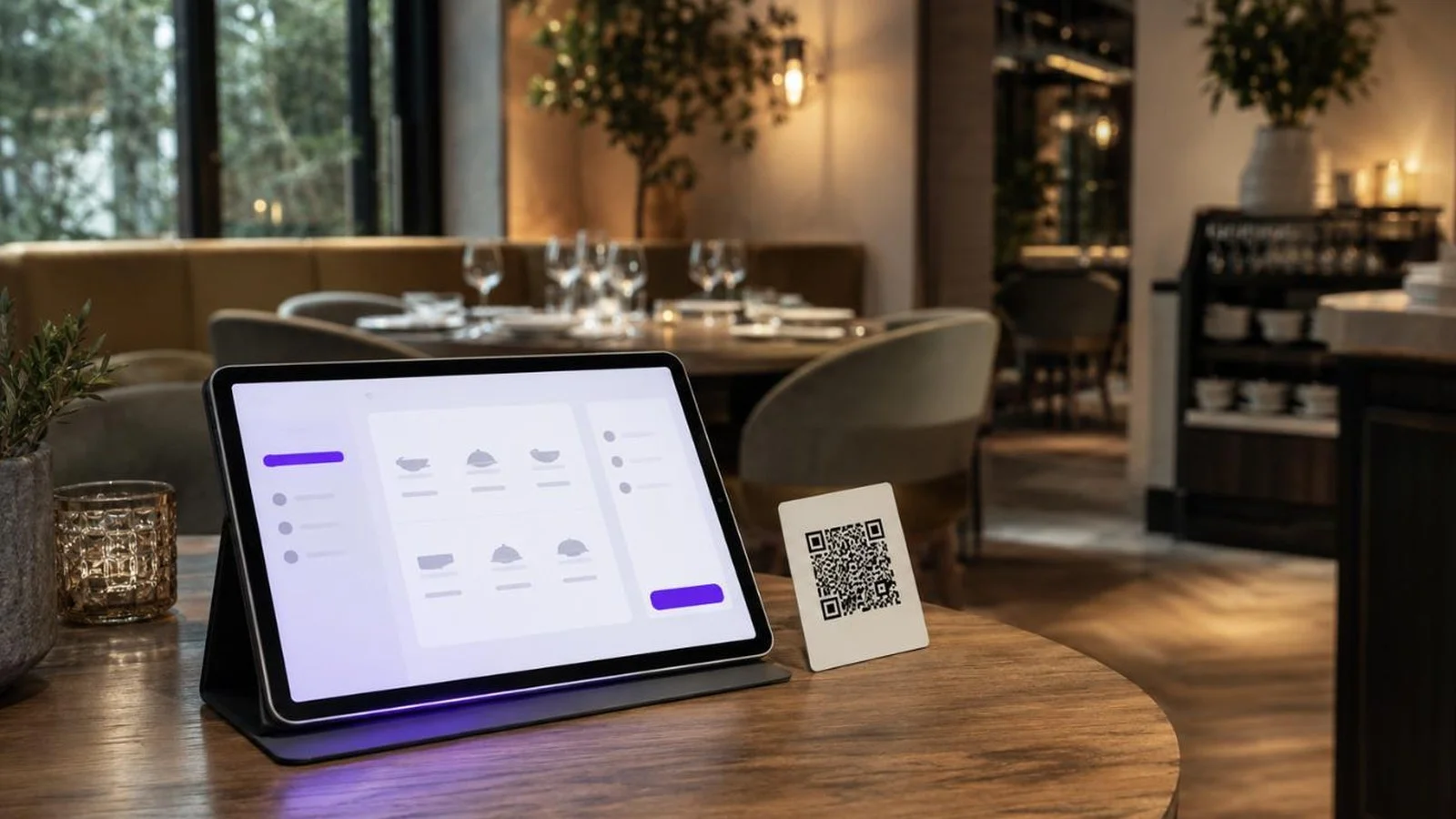
Guests can send a service request from their own phone, such as asking for the bill or flagging a wrong order. The request reaches the team as a message rather than as a raised hand waiting to be noticed.
In FineDine, QR, delivery and pickup orders are followed on the same Orders screen, and the reporting layer refreshes hourly, so the number you check during the day is today's rather than yesterday's.
How you set up the codes themselves, one per table or one for the whole room, is a separate decision with its own trade-offs, and we cover it in the QR ordering guide.
What software will not do: decide whether to comp a table, cover a section when someone calls in sick, or explain why a number moved. A report tells you what happened. Plan limits change what is included, and the current list sits on the pricing page.
To see how this would sit on your own floor plan, opening hours and reservation flow, you can request a FineDine demo.
Questions managers ask about day-to-day operations
- What are restaurant operations?
- The systems and routines that keep a venue open: opening and closing procedures, stock and ordering, staffing and rosters, service on the floor, payment and reconciliation, hygiene and safety records, and the reporting built on top of them. Operations describes how the work is organized; management describes who decides what inside it.
- What are some examples of day-to-day operations in a restaurant?
- Checking the float and the room before doors open, briefing the team, handing out sections, tracking what the kitchen has run out of, handling guest issues while service is live, reconciling card and cash at the close, placing the next day's order and signing off the closing records. Rosters, invoices, stock counts and reports run weekly or monthly rather than daily.
- What is the 30/30/30 rule for restaurants?
- It is usually quoted as a cost split: roughly 30% of revenue to food, 30% to labor and 30% to overhead, with what remains as profit. It works as a rough starting frame for a new manager. No standards body defines it, the quoted versions differ, and a bar, a bakery and a fine dining room will not carry the same split.
- What are the three C's in a restaurant?
- There is no single accepted list. Versions in circulation include cleanliness, consistency and courtesy, or customer, cleanliness and communication. It is a memory aid for training rather than a measure, and anything you want to manage is better tracked with a number you collect yourself.
- What is life like as a restaurant manager?
- The schedule follows service, so the hours depend on the venue and can cover evenings and weekends. The work is interruption-heavy, which is why counting interruptions is worth the effort. What tends to balance it is the speed of the feedback: a decision made at seven is visible by ten, and the result of a good service is in the room while you are still in it.