
You've posted the specials, answered the reviews, maybe boosted a post or two, and this Tuesday's covers look a lot like last Tuesday's. Before you put more money into digital marketing, check where all that effort sends people. Every post, listing and printed QR code ends in a link. That link lands on one of three pages you already own: your Google Business Profile, your menu, or your ordering or booking page. If those are out of date or hard to use on a phone, a bigger ad budget sends more people to the same problem. So work in this order. Fix the pages you own. Pick one or two channels you can keep up with. Set up a way to see what worked before you spend. What you invest first is usually a few hours a month. Ad money comes later.
Start where the links land
A PDF menu on a phone is an A4 document squeezed onto a six-inch screen. The guest pinches, zooms, scrolls sideways, and still can't tell whether the prices are this year's. A menu page built for the phone, with today's prices on it, gives every other piece of marketing somewhere to land.
Each of the three pages answers a different question. The Google profile says whether you're open and where you are. The menu page says what you serve and for how much. The ordering or booking page turns that into a table or a bag. Social media, email and ads mostly point at these three. When one of them is wrong, every post pointing at it works against you.
One habit is worth keeping. Once a month, order from your own restaurant on your own phone, on mobile data rather than the restaurant Wi-Fi. A broken payment step is easy to miss from the back office and hard to miss when you're the one paying. If you're setting up ordering for the first time, our guide to online ordering for restaurants covers what to do and what to avoid on that page.
Then come the channels: local search, short video, email or SMS to people who've already eaten with you, and paid ads once there's a working page behind them. Plenty of guides cover those. The rules of thumb they lean on hold up less well in a kitchen.
The 30/30/30 rule, and why marketing isn't in it
The 30/30/30 rule is about costs. It splits revenue into rough thirds: food and beverage cost, labor, and everything else (rent, utilities, repairs, fees), with about a tenth left as profit. The split shifts with the concept. A fine-dining room and a coffee counter won't land in the same place.
There's no marketing line in it. Whatever you spend comes out of the overhead third, next to rent and the dishwasher repair, or out of that last tenth. That makes it one of the easiest costs to cut in a slow month. It's also why fixing your own pages, which costs time rather than money, matters more to a small operation than which channel you pick.
The rule also shows a cost that promotions hide. A 20% discount doesn't change what the plate costs to make, so food cost as a share of revenue goes up on every discounted order. A promotion can fill the room on a Tuesday and still move you further from the thirds. Before you run one, work out what a discounted cover leaves after food cost. The extra takings on the day are the wrong number to look at.
The 3-3-3 rule: choose a version you can keep up
Unlike the cost rule, the 3-3-3 rule has no fixed meaning. In marketing posts it usually means a cadence built from threes: a few posts a week, on a few platforms, in a few formats. In short-video advice it sometimes means the first three seconds decide whether anyone keeps watching. Neither was written with a kitchen in mind.
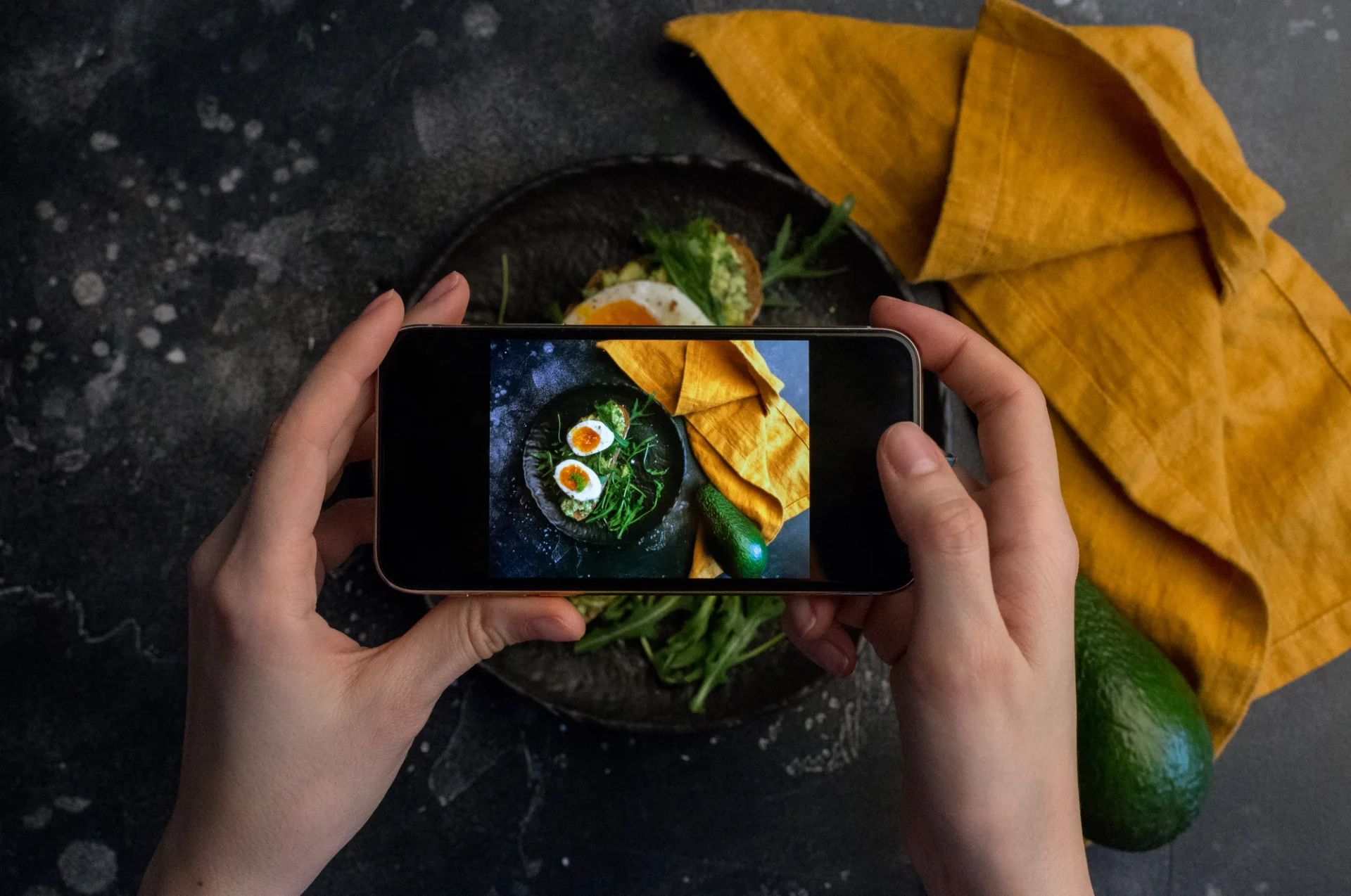
Both skip the question of where the pictures come from. The menu page wants one photo per dish. A delivery listing wants the same dishes cropped to its own frame. Social wants something new every week. Daylight is the easiest light to shoot in, and in many kitchens it falls during prep for dinner service. When the person with the camera is also on the pass, the posting schedule tends to go first.
A restaurant version of the rule starts from the photos. Shoot each dish once, framed for the tightest crop you'll need, and use that shot on the menu, the order page and the post. Then set posts per week at a number you could still hit in a week when two staff called in sick. If short video is part of the plan, our TikTok guide for restaurants goes through the format.
The 7 P's, briefly
The 7 P's are product, price, place, promotion, people, process and physical evidence. For a restaurant most of the list is operations: the menu, the prices, the staff, how a table gets served. Digital marketing sits mainly in promotion.
On a phone, two more of them move online. Place is partly your Google profile and your order page. Physical evidence, meaning what a guest can see before paying, is your photos and your menu page. For someone who has never been inside, those two do most of the work of showing what the room is like.
Dine-in guests are the ones you know least about
Delivery and booking apps usually take a name and a phone number with each order, and the app decides how much of that guest you get to see. The guest at table 12 who paid by card at the end of the meal often leaves nothing you can use. They've already eaten with you, so you don't have to sell them on the food. You just have no way of reaching them.
That data has to be collected at the table. A QR menu can ask for feedback or offer a sign-in. A receipt can carry a short survey link. A server can ask. Keep the ask small and give a reason, like hearing about next month's menu first. For a few ready-made questions, our list of restaurant survey questions is a starting point. Expect most tables to ignore it. The ones who answer are often regulars, and that's the list worth building.
More than one location
With several sites, split the work by what differs between them. Brand voice, photo style and the core menu can run from the center. Opening hours, local prices, each Google profile and anything that sells out belong to the location. Each site needs one person who fixes those on the day they change.
A failure you can see coming: a group-wide post announces a dish one branch doesn't carry, and the guest finds out at the table. Check every central post against each site's live menu before it goes out.
How to tell whether it paid off
Most restaurants can't trace a guest back to the post that brought them in, and no tool fully fixes that. What you can do is keep sources apart before you spend.
Give each placement its own code or link: table, window, flyer, delivery bag. Scans then come in already split, and you see which placements get used at all. Add an optional "how did you hear about us" field to the booking form. Keep item-level sales for every week you change something. A campaign that adds covers but lowers the average ticket hasn't earned anything.
Choose the measuring window by what it covers. It should take in several weekday and weekend services. Two weeks can mean a lot of orders in a busy delivery kitchen and a few dozen covers in a small neighborhood place, and at low volume you need longer. Compare like with like. A month with school holidays, a heat wave or roadworks outside the door won't line up with the month before it. If guests pay by scanning at the table, that's one more source you can keep apart, and our piece on QR payment explains how it works.
Where FineDine fits
None of this needs FineDine. Here is the part of the work it can take off your hands, and where it stops.
In Menu Manager, the QR menu, the share link and the ordering page all run off the same menu. Change a price there and publish, and the new price shows wherever that menu appears. The QR menu's welcome page also gives guests a sign-in and a feedback button, which is one way to start building that dine-in list.
AI Website Builder writes a restaurant site from a short prompt and can pull details from your Google Business Profile. It also uses the menu and venue information already in the panel. When we tested it with the sample menu still in place and the venue details empty, the site listed the sample dishes and placeholder venue details. Set up the menu and venue first, then generate the site.
AI Media Studio enhances an existing dish photo (adding steam, garnish or more light) or creates a new one. Every output uses credits, and the cost depends on the type. An enhancement costs more than a basic generated image. Whatever it produces still has to match the plate the kitchen sends out.
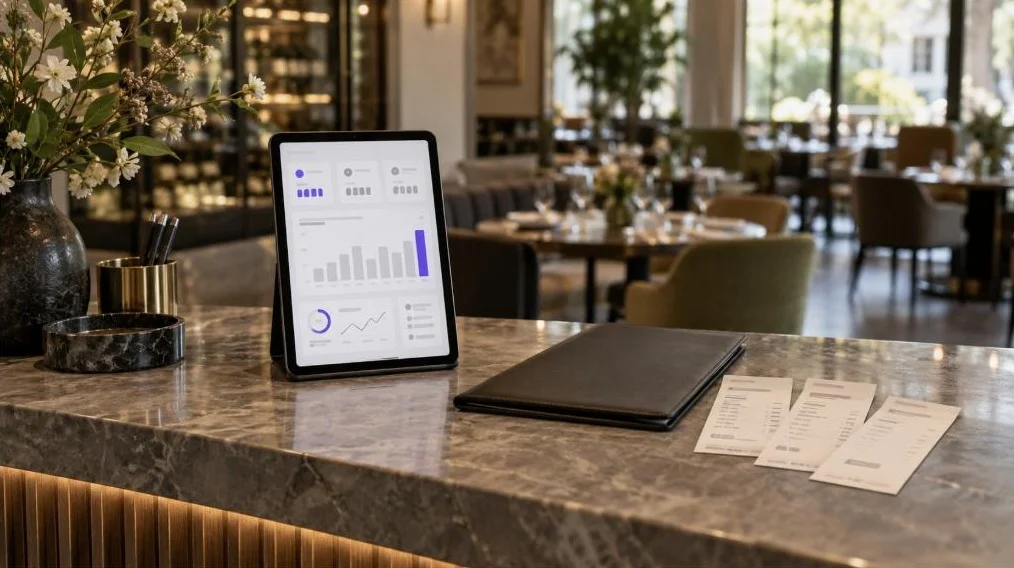
FineDine IQ, the AI Reports tab, updates hourly. It compares periods of 7, 14, 28 or 90 days, or a custom range, on figures like menu views, item views, orders and average ticket. Each morning it checks for anomalies. It also suggests actions such as adding photos to items that lack them, surfacing hidden bestsellers or running a promo on a slow day. Promo Codes can be a percentage or a fixed amount, limited to dine-in, delivery or pickup, with a minimum order value.
FineDine doesn't post to your social accounts today. AI Marketing Hub, announced for that job, is marked Soon in the panel. What each plan includes is on the pricing page.
| Rule | What it says | Where it helps | What it leaves out for a restaurant |
|---|---|---|---|
| 30/30/30 | Roughly a third of revenue each to food and beverage cost, labor and overhead, about a tenth left as profit | Spotting a cost line that has drifted | There's no marketing line, so spend competes with rent and repairs, and discounts raise food cost as a share of revenue |
| 3-3-3 | No fixed meaning. Usually a posting cadence built from threes, sometimes the first three seconds of a video | Keeping a schedule small enough to last | Photo production, which clashes with prep and service |
| 7 P's | Product, price, place, promotion, people, process, physical evidence | Checking the whole guest experience, beyond promotion | On a phone, place and physical evidence are your Google profile, menu page and photos |
Frequently Asked Questions
- How much should a restaurant spend on marketing?
- We can't give a percentage that holds across markets. Ad costs and delivery commissions vary too much from country to country. Start with an amount you could lose without changing anything else that month, and raise it once a channel brings in orders you can trace.
- Do we need a marketing agency?
- That depends on whether someone on your team will own these pages day to day. An agency can run ads and design pages. It can't photograph tonight's special or catch a wrong price on the menu, and those are the jobs that decide whether the rest works.
- Is a Google Business Profile enough without a website?
- It covers much of being found. It's a weak place to keep a menu, because you're publishing prices and availability on a listing whose format you don't control. A menu page of your own is quicker to correct, and you can link to it from the profile.
- How soon should we expect results?
- That depends on how often your guests come back. A place people visit weekly gives a readable signal much sooner than one they visit twice a year. Wait at least one full return cycle before you judge a change.
- Should we reply to every review?
- If you can't answer all of them, start with the negative ones. A short, factual reply reads better than a long defense. Don't buy reviews. Google's policies prohibit fake reviews, and breaking them can put the listing itself at risk.