Look up restaurant trends for 2026 and the same headlines come back: more automation, rising cost and margin pressure, and guests who want a business that feels considered rather than generic.
This page turns each one into the specific setting or habit it actually becomes, once you stop reading about the headline and start running it.
The Room Fills With Software Anyway
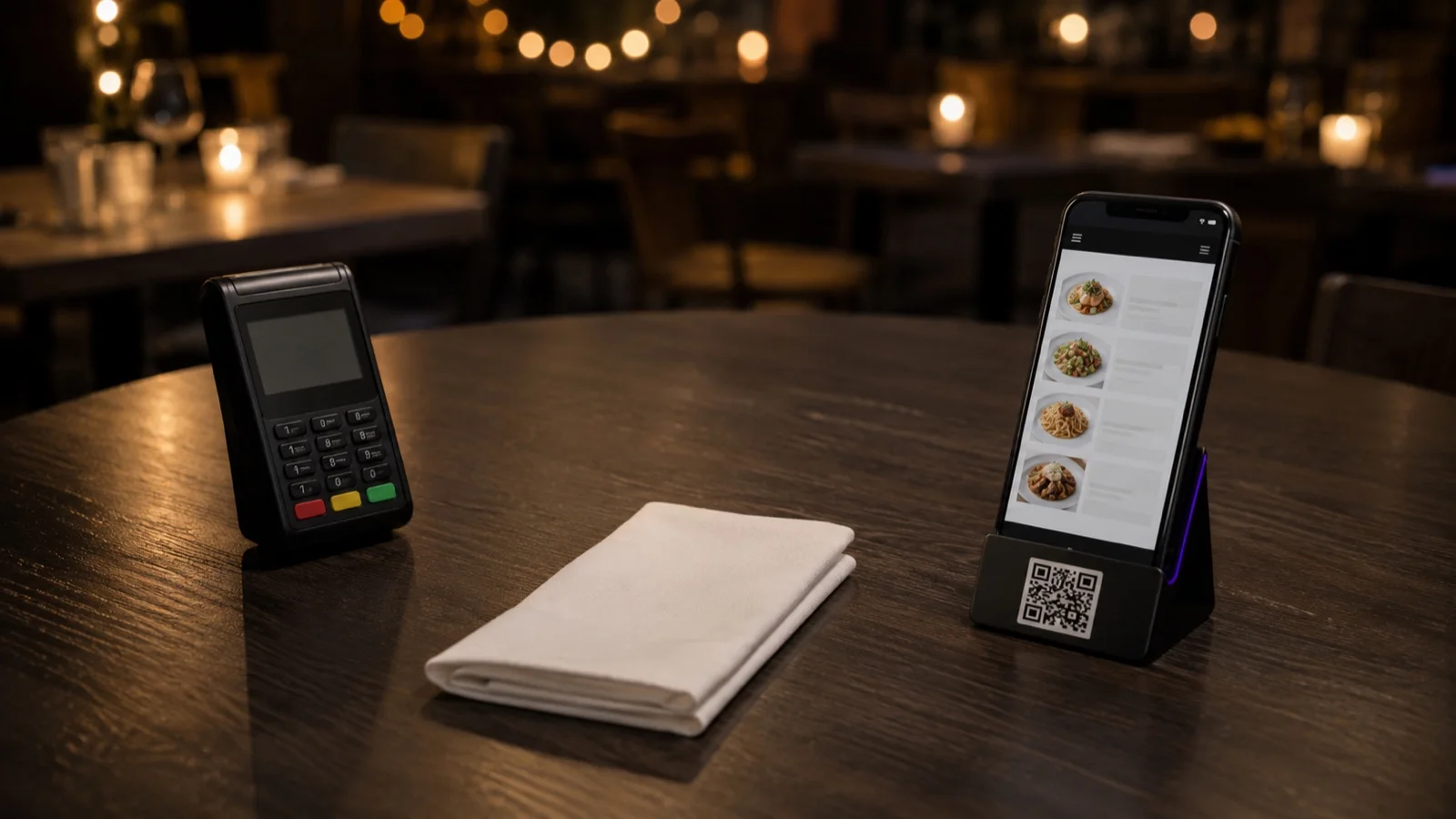
Ask five operators what “digitalization” means and you get five different screens: online ordering, a QR menu, a POS, a delivery app, a booking widget. Three or four of these often end up running side by side, added one at a time, in whatever order a problem showed up in.
The trend reports call the result a “fragmented tech stack” and move on. The part that actually costs time is smaller and more specific than that: a change made on one screen, a new price or a paused item, has to be repeated on the others by hand, and it is easy to forget one.
The Daily Read Nobody Used to Get
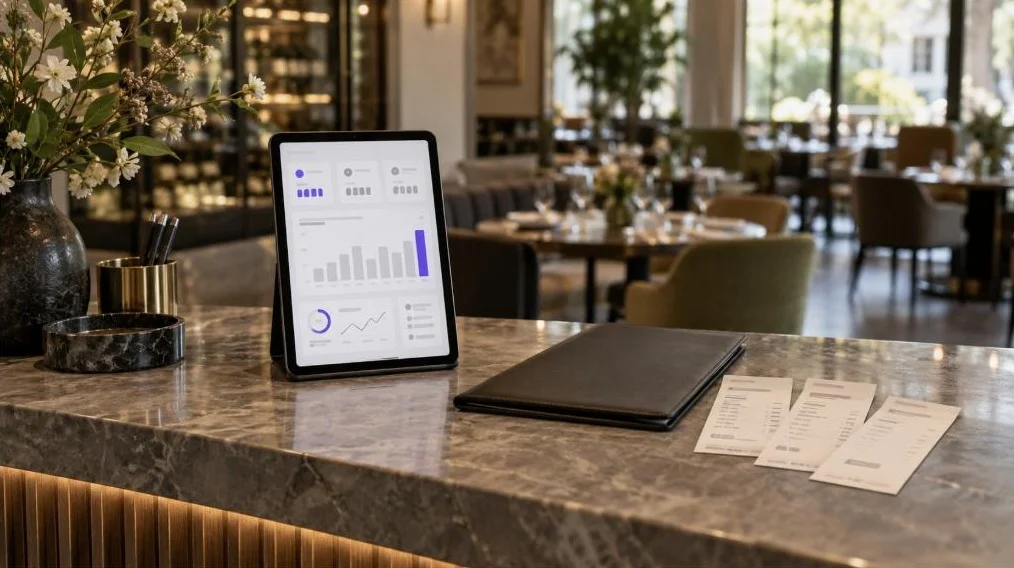
The other automation headline is the AI one, and it usually gets illustrated with a phone answering the reservation line. The more useful version is quieter: something that checks the numbers on its own, so a manager does not have to notice a slow decline before it becomes a bad month.
That is closer to what a daily anomaly check actually does in practice: it updates throughout the day and flags numbers that move outside the normal range, rather than waiting for a monthly report to confirm what already happened.
None of that replaces the weekly walk-through of the kitchen and the floor. What it changes is what gets noticed on a day nobody had time to run the numbers by hand.
Personalization Doesn’t Need a Data Team
The personalization headline usually points at a data team and a recommendation engine, which is a fair reason for a single-location operator to skip the section entirely. What is actually within reach is smaller and more mechanical than that.
A discount that only applies to the channel it makes sense on, and not to three others where it does not, is simpler to set up than it sounds: a code capped by a minimum order and limited to a single channel targets the moment it was built for instead of applying everywhere at once.
The other half of the same idea runs in the opposite direction: collecting what a guest says about a dish through the digital menu they already used, rather than a physical comment card that mostly stays blank.
What Each One Becomes in FineDine
Three settings carry the weight of the three headlines above.
For the fragmented stack: dine-in QR, delivery and pick-up, and tablet ordering all sit under the same Orders section in FineDine, and a single menu can be marked active on whichever of those channels you actually use, instead of kept as separate copies. That covers the channels built into FineDine itself; a third-party delivery app runs its own separate menu, and if you use a POS integration, check separately how its menu stays in sync.
For the daily read: FineDine’s AI Reports updates hourly and tracks revenue, orders, average ticket size and conversion, among other numbers, over the last 7, 14, 28 or 90 days or a range you set yourself, always against the period before it. It also builds a list of tap-to-apply actions from the same numbers: an item with photos missing, a bestseller nobody is promoting, a slow day worth a push.
For targeting: a FineDine promo code carries a channel condition and a minimum order value, both set once when the code is created. Guest feedback is also collected directly through the QR, tablet or delivery/pick-up menu and shown in the panel.
Margin Pressure Gets the Depth It Needs Elsewhere
Cost and margin pressure is one of the most consistent headlines in 2026 restaurant industry coverage - the U.S. National Restaurant Association’s 2026 report found 42% of operators say their restaurant was not profitable in 2025. It deserves more than a paragraph here: how restaurant profit margin actually gets calculated and the four things that move it.
The short version worth keeping here: a channel that is not actually connected to your live menu, or a discount with no conditions attached, does not show up as a single line anywhere. It just shows up as a lower number at the end of the month.
The One Setting Worth Checking This Week
Not everything above is worth a Tuesday afternoon at once. Start with whichever one has been quietly costing you the longest.
Confirm which of your ordering channels are actually reading from the same menu, rather than three separate copies of it.
If that part already works, open whatever daily numbers you have access to and look for the thing nobody flagged this week. A slow decline is easy to miss one day at a time and hard to miss once someone points at it.
| Trend headline | What it actually becomes | Where to look this week |
|---|---|---|
| More automation / fragmented tech stack | One menu marked active across FineDine’s own ordering channels, instead of separate copies to update by hand elsewhere | Which channels are reading from the same menu |
| AI everywhere | A daily read of revenue, orders, average ticket and conversion, with a short list of fixes attached | Whatever daily numbers you already have access to |
| Personalization at scale | A promo code with a channel and a minimum order attached, plus guest feedback collected through the digital menu | Whether your current codes carry any conditions at all |
| Margin pressure | Its own page: how the number is calculated and the four things that move it | See the linked guide |
Frequently Asked Questions About 2026 Restaurant Trends
- Are restaurants actually struggling in 2026, or is that overstated?
- Cost and profitability pressure is real: the U.S. National Restaurant Association’s 2026 report found 42% of operators say their restaurant was not profitable in 2025, with rising food, labor and energy costs named as ongoing pressures for 2026. Margin is a more useful number to track than a label like “struggling.” See the margin guide linked above for how to calculate the number that actually tells you where you stand.
- What is the biggest issue facing restaurants right now?
- Cost and margin pressure is the most consistently named issue in 2026 industry data - the U.S. National Restaurant Association reports that more than 9 in 10 operators see costs like food, labor, insurance, energy and card processing fees as a significant challenge. It does not get solved by a single setting, but tracking your own margin closely enough to see a decline early gives you more room to react than discovering it at the end of a bad quarter.
- Do I need a data team to do any of this?
- No. Everything on this page is a setting or a habit, not a hire. The daily numbers read and the channel-targeted promo code are standard product screens, not a custom build; how far back you can look depends on your plan. The parts of “AI” that genuinely need a data team go further than anything covered here.
- How do I know if a trend actually applies to my restaurant, or if it is written for chains?
- Check whether the headline describes a decision or a department. “Automate the front line” is a decision any size restaurant makes; “build a customer data platform” describes a department most single-location restaurants do not have and do not need yet.
- If I turn on a channel in FineDine, does that also sync with a third-party delivery app or marketplace?
- No. Channel activation in FineDine covers the ordering channels built into the product itself: dine-in QR, delivery and pick-up run through FineDine, and tablet ordering. A separate marketplace app runs its own menu on its own system; FineDine’s channel activation does not sync that marketplace’s menu, and managing that menu is independent of this FineDine setting.