The moments where restaurants lose the most time are rarely during the meal itself. They happen while guests wait to place their order, wait for the bill, and wait for the payment to process. These delays add up — reducing guest satisfaction and slowing down table turnover.
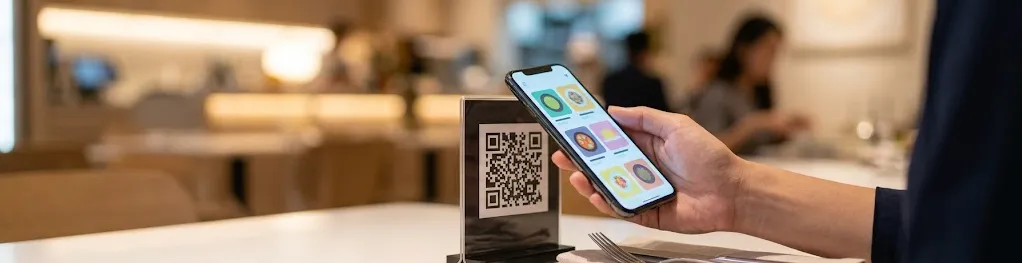
Order and pay at the table is the technology that digitizes this entire process. Guests scan a QR code with their phone, view the menu, place their order, and pay their bill — all in seconds, without downloading an app or needing any additional hardware. Phone to QR code, menu to order, bill to payment — the whole flow happens in minutes.
This guide covers how the system works, the advantages it delivers to restaurants, how it transforms the guest experience, and how to integrate it into your operation.
How Does Order and Pay at the Table Work?
The flow is remarkably simple:
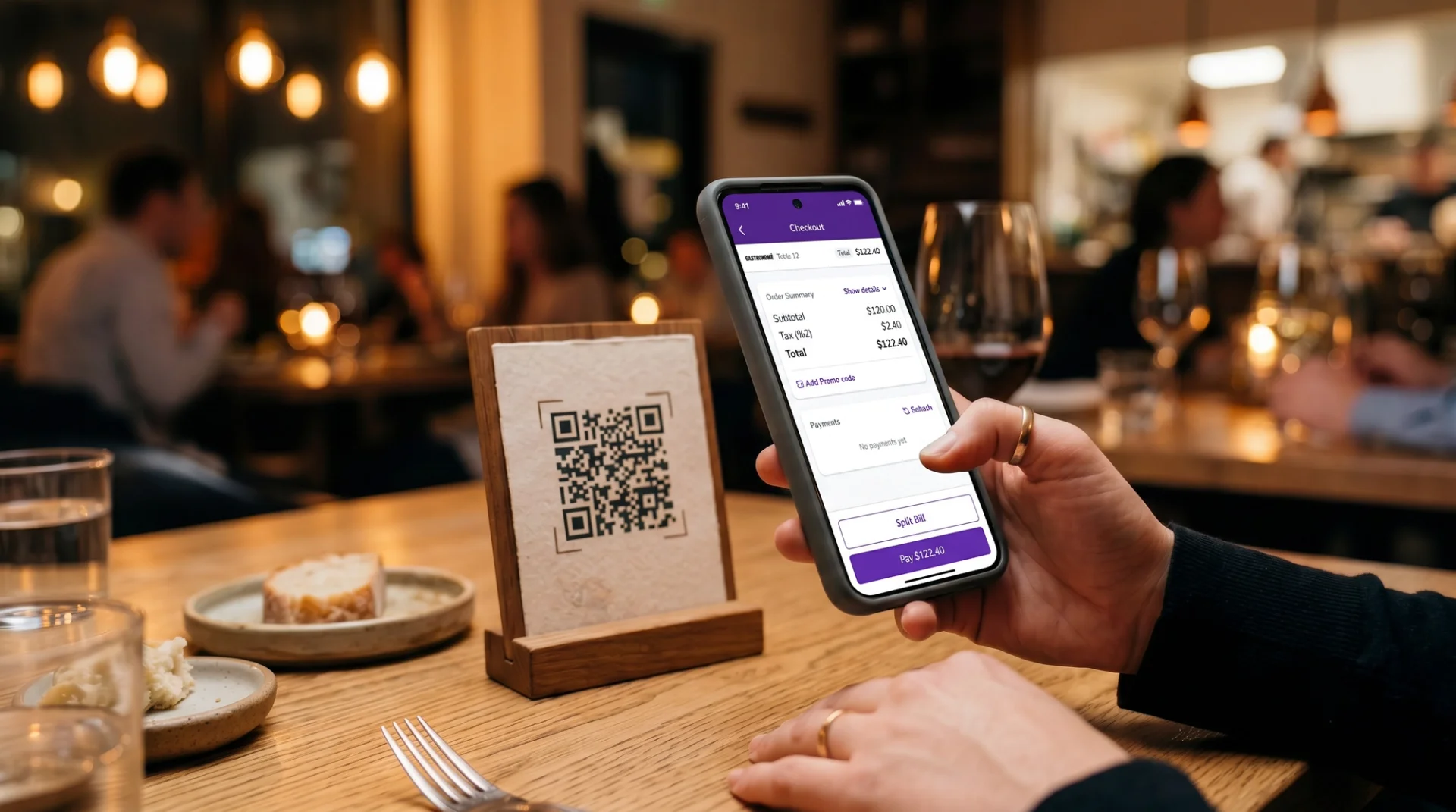
A guest sits down and scans the QR code on the table with their phone. The code takes them directly to the restaurant's digital menu. They browse the menu, see product photos and descriptions, select what they want, and confirm their order. The order is sent to the kitchen instantly. When the meal is finished, they view their bill on the same system and pay from their phone — credit card, Apple Pay, Google Pay, or any other digital payment method.
Throughout this process, there is no need for a server to visit the table to take the order or bring the bill. The server focuses on what actually matters: attending to the guest, delivering dishes, and enriching the dining experience.
Why Should You Switch to Order and Pay at the Table?
Higher Orders and Average Check Size
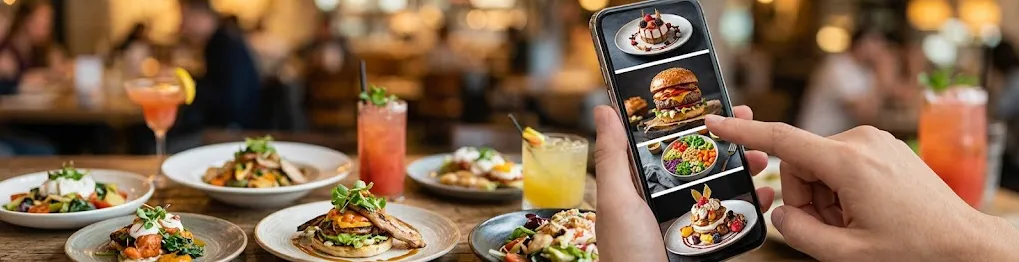
When guests see professional photos and detailed descriptions on a digital menu, they discover items they would never have noticed on a paper menu. Sides, desserts, drinks — when presented visually, these items see significantly higher order rates. Smart recommendation systems amplify this effect: when a guest selects a main course, the system automatically suggests the most commonly paired add-ons.
The result: a 15 to 25 percent increase in average order value — without requiring any upselling effort from your staff.
Faster Table Turnover
In a traditional setup, significant waiting time accumulates between a table placing its order, finishing the meal, and paying the bill. Order and pay at the table eliminates most of that dead time. Orders go to the kitchen instantly, and bills are settled in seconds. A restaurant that saves an average of 15 minutes per table can seat one additional party at the same table on a busy evening. During peak hours, that difference translates directly into revenue.

Fewer Order Errors
Orders taken by ear and written by hand carry a high error rate. A misunderstood garnish, a forgotten side, a mixed-up allergen note — these hurt guest satisfaction and create unnecessary rework in the kitchen. When the guest enters the order themselves, the error rate drops to nearly zero. They choose exactly what they want, write their own special requests, and verify allergen information themselves.
Staff Efficiency
Order and pay at the table does not exist to reduce your staff — it exists to make your existing team more efficient. Servers are freed from the mechanical tasks of taking orders and processing bills, giving them more time to engage with guests, present dishes, and elevate the experience. For venues struggling to hire, this efficiency gain is critical.
Contactless and Hygienic
Shared paper menus and POS devices that pass between hands are hygiene-sensitive touchpoints. When the guest orders and pays from their own phone, physical contact is minimized. This is a deciding factor for health-conscious diners and international travelers.
What Changes for the Guest Experience?
Order and pay at the table gives guests control. There is no need to wait for the server to be available — the guest orders when they are ready. They browse the menu at their own pace, look at photos, read details. If they want to add something during the meal, they do it from their phone without flagging down a server.
The biggest difference appears at the moment of payment. In a traditional setup, requesting the bill, waiting for it to arrive, making the payment, and waiting for change takes an average of 8 to 10 minutes. With tableside payment, that drops to under 30 seconds. The guest finishes their meal, sees the bill on their phone, selects a payment method, and leaves. This speed is especially valuable during lunch service, business meals, and busy evening shifts.
Bill splitting also becomes effortless in a digital environment. The awkward "how do we split this" conversation at group dinners disappears — everyone pays their share from their own phone.
Which Venue Types Is It Suitable For?
Order and pay at the table is not limited to restaurants:
Restaurants — Accelerates every stage of the dine-in operation. Applicable across every format from fine dining and casual dining to fast casual and bistros.
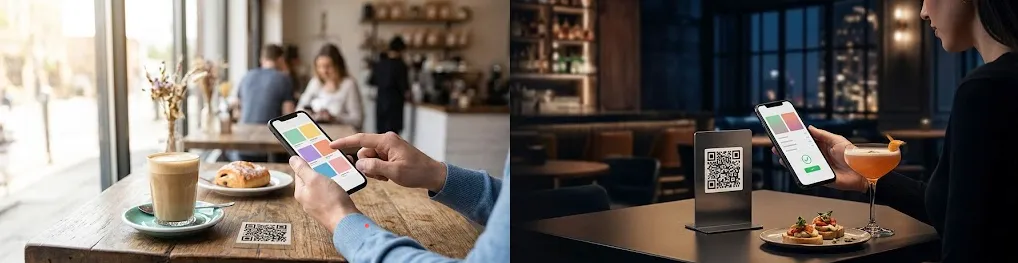
Cafés — Allows guests to order from their seat without waiting in line during busy hours. Coffee and pastry, ordered from the table.
Hotels — Room service, lobby bar, poolside restaurant, terrace — order and payment from a single QR code across different areas. Multi-language menu support is a critical advantage for international guests.
Bars and pubs — Eliminates the difficulty of communicating with staff in noisy environments. Guests make their selection and complete payment from their phone.
Airports and food courts — Maximizes table turnover in high-volume, fast-service locations.
Order and Pay at the Table with FineDine
FineDine lets you manage the entire order-to-payment process end-to-end from a single platform. Here are the specific advantages it brings to your venue:
Bill settlement in seconds. The guest scans the QR code, sees their bill, and completes payment. Split-bill options — pay in full, split per person, or set a custom amount — support every payment scenario. Average time saved: 15 minutes per table.
Every payment method. Credit cards, Apple Pay, Google Pay, and other digital wallets — FineDine works with top-tier payment partners to make checkout accessible to all of your guests.
Preserve the traditional service experience. Order and pay at the table does not replace the server — it makes the server's job easier. Your team is freed from mechanical tasks and can focus on hospitality and enriching the guest experience. Less bill stress, more guest satisfaction — and higher tips.
Guest data collection. Every payment transaction captures the guest's name, email, and order details. Use this data for loyalty programs, personalized campaigns, and repeat visit incentives.
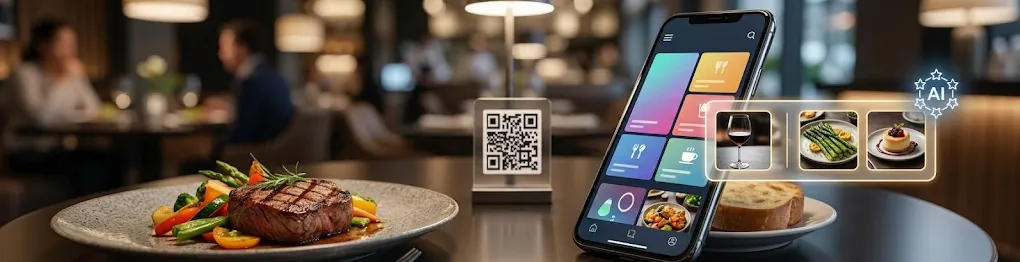
Smart recommendations. FineDine AI-powered smart recommendation engine automatically suggests the most popular add-ons based on the guest's selection. This feature increases revenue per order without any server intervention.
Integrated with Menu Manager. Price updates, new item additions, and sold-out flags are instantly reflected across your QR menu, website, and ordering page — all managed from a single dashboard.
What to Consider When Implementing the System
Brief your staff. No matter how intuitive the system is, your team needs to understand how it works and be able to guide guests. Some customers will ask for help, especially in the first few weeks.
Position QR codes correctly. Every table should have a QR code in a clearly visible, easily scannable location. Use print quality that remains scannable even in dim lighting.
Keep your menu visuals current. Items with photos on a digital menu receive significantly more orders. Use FineDine Media Studio to transform phone photos into professional visuals and keep your menu's visual quality high.
Check your internet infrastructure. A reliable Wi-Fi connection is essential for the system to run smoothly. Plan your guest Wi-Fi capacity for peak hours.
Keep the traditional option available. Not every guest will prefer digital payment. Maintain the option to request a bill and pay traditionally — the system should be presented as a convenience, not a requirement.
Conclusion: Reduce Wait Times, Capture More Orders
Order and pay at the table eliminates one of the biggest operational bottlenecks in restaurants — the waiting time embedded in the ordering and payment process. It gives guests speed and control while delivering efficiency and data to the business.
Table turnover increases, revenue per order rises, staff work more efficiently, and guest satisfaction strengthens. And the transition is not complicated — with the right tool, you can start in minutes.
With FineDine, manage tableside ordering, fast checkout, bill splitting, smart recommendations, and guest data collection — all from one platform.