
When guests say the service was slow, the first thing to ask is where in the visit they were waiting. Being slow to notice a table at the door and being slow to bring the bill are different problems, and one fix won't solve both. Most service complaints land on one of five points: the door, ordering, small requests during the meal, the bill, or what the guest writes once they've left. Work out which one yours land on before you train anyone or buy anything. The rest is fairly plain work. Time two waits, give the team a written rule for putting mistakes right, and ask for feedback while the guest is still at the table. And whatever you change, an order sent from the table or by a server becomes a service order (SO) for the kitchen or the bar. It only moves if someone there is watching for it.
What guests actually remember about service
When a review complains about service, it's usually about waiting, and more often than not it's waiting to be noticed. Rudeness comes up less. A table can be welcomed warmly at the door and still go home talking about how long it took to order.
That memory ends up online, and for an independent restaurant it costs money. A 2011 Harvard Business School study of Yelp data, covering Seattle restaurants from 2003 to 2009, found that a one-star rise in rating was associated with roughly a 5 to 9 percent increase in revenue for independent restaurants. It's one city, and the data stops in 2009. Chain restaurants didn't show the same effect either, so if you run a branch of a known brand, don't lean on the number.
Five points where service slips
Training and equipment each fix one of these points, not all of them. A faster way to take orders does nothing for a bill that's slow to arrive. A new greeting script won't help the table that can't catch anyone's eye after the mains.
The table starts from what the guest says, because that's the sentence you'll find in your reviews. Sort your own complaints against it. Often one row fills up faster than the others, and that row is where to start.
The wait after the guest sits down
In a review, "we waited ages" can mean two different things. Waiting for a table has a cause the guest can see, because the room is full. Waiting after sitting down has no cause they can see, so it's easy to read as being ignored. That's the wait worth timing on its own.
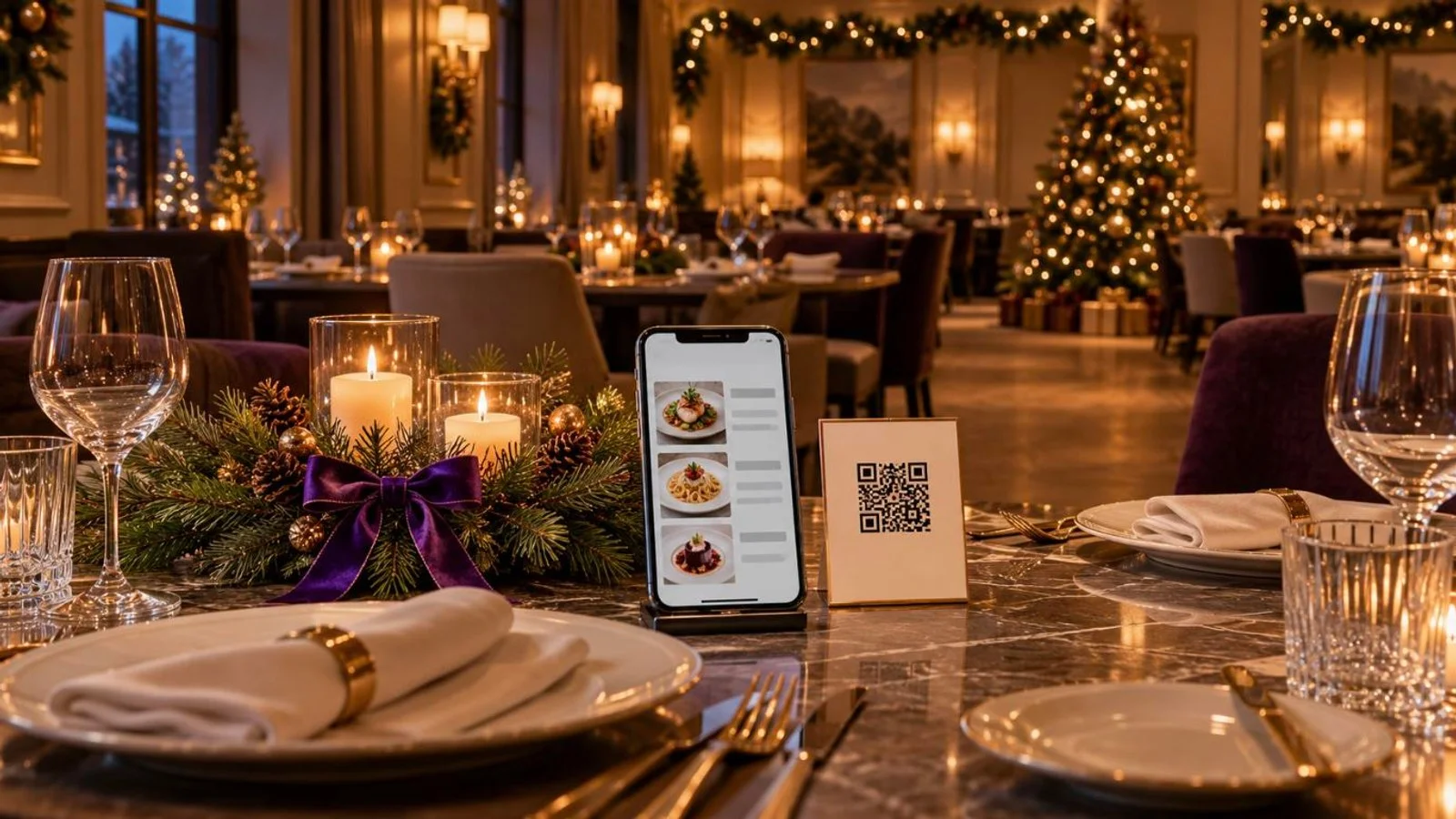
At peak, a table is often ready to order while its server is still busy with another table. If a ready table can send its order without that server, the gap between sitting down and ordering gets shorter. Three devices can do this: a QR menu the guest orders from, a tablet left on the table, or a handheld the server carries. A tablet can also run as a self-service kiosk. The menu looks broadly the same on each. What changes is who enters the order, and your service style settles that. A fine-dining room and a counter-service café won't choose the same setup. You don't have to choose just one, either. Digital ordering and server ordering can run side by side in the same room.
QR codes can be set up in two ways, and each runs the floor differently. With a code per table, the team knows which table ordered. One code for the whole room means less to print and manage, but then the guest has to give their table number while ordering.
What happens to the order once it's sent
Once an order is sent, it becomes a service order (SO). That's the table, the items, the time and who sent it, passed to the kitchen or bar that makes those items, where it shows up on a screen or a printer. Digital ordering saves the walk to the terminal. It doesn't pick the order up at the other end. If nobody is watching that screen on a busy night, the wait hasn't gone away. It has moved from the table to the pass. So before you switch digital ordering on, name the person who watches the screen on each shift.
Service requests can come in through the same QR code as food orders, but they need a different person. A guest asking for the bill, or saying the wrong dish arrived, needs someone on the floor. Decide who picks those up. Then decide who steps in when a request has gone unanswered too long.
Write down the parts of service that shouldn't depend on who's working
If staff turn over often, what matters most is whatever a new server can learn on their first shift. Put these on paper:
1. Greeting and seating: who does it, how quickly, and what they say if there's a wait.
2. The first visit to the table: what gets checked, and when.
3. The questions guests ask most often, with a sample answer for each. A new server can use a sample answer on the floor straight away, while a long policy document often goes unread.
4. What to do when something goes wrong: who can offer something on the house, up to what value, without asking first.
5. Closing the table: the bill, the goodbye, and who resets it.
The fourth item needs the most precise wording. Say a drink goes to the wrong table and every replacement needs a manager's approval. The server then spends the next few minutes looking for the manager while the guest is still without their drink. Write down which mistakes staff can fix on their own, and up to what value.
Ask before the guest leaves
Feedback from a guest who is still at the table has one advantage over anything that comes later. There's still time to act on it during the same visit.
Keep feedback on the visit separate from ratings for dishes. A short survey covers the visit as a whole, and the questions you put in it decide what you learn. But a visit can score well overall while one dish keeps getting marked down. Ratings on individual dishes catch that, and they tell the kitchen which plate to look at.
In-house feedback can't replace public reviews. It won't raise your score on a review platform, and it shouldn't be used to steer unhappy guests away from posting one. What it can do is narrower. You hear about a problem before the next ten tables run into it.
Where a person still does the job better
Some steps of the visit don't get any better with a screen. In a few of them, a person on the floor still does the job better:
- Some guests would rather not use a QR code. If you drop the printed menu or the option to order through a server, those guests have nothing else to use.
- In a dim room, some phone cameras struggle to read the code.
- First-time guests often ask what's good, and a recommendation is still one of the most useful things a server offers.
- When a large party splits the bill, payment at the table handles the simple splits. Once it turns into working out who had what, a person at the table is often faster.
A 30-day plan for improving service
If you change several things at once, you won't know which one worked. So measure first, and change one stage at a time. The recovery rule in week 2 and feedback at the table in week 3 count as changes too. If they come in during the same month, the week 4 number shows the effect of all of them together, not just the fix to that one stage.
1. Week 1: go through your last 50 reviews and put each complaint under one of the five stages.
2. Week 1: take the stage with the most complaints and time its wait across three services. For Arrival, time from walking in to being greeted. For Ordering, seated to ordering. For During the meal, request made to request answered. For Paying, bill asked for to bill settled. After the visit has no wait to time, so count how many complaints it gets in a week instead. A phone is enough.
3. Week 2: work on that stage and leave the others alone.
4. Week 2: write the recovery rule and tell the team what they can do without asking.
5. Week 3: start asking for feedback before guests leave, and read it every day for the first two weeks.
6. Week 4: time the same stage again across three services and compare the result with week 1. If it hasn't moved, go back to the complaints under that stage. The cause may be something the change didn't touch.
Orders, payment at the table and guest feedback in FineDine
In FineDine, orders, service requests, payment and feedback are all handled from one panel. A table that's ready can send its order without waiting for a server, send the requests you've allowed, such as asking for the bill, and pay at the table.
After the visit, a survey collects feedback on the visit as a whole, and guests can rate and review individual dishes on the menu itself. FineDine IQ is updated hourly and has Feedbacks and Timing tabs next to Sales, so in-house feedback and order data sit in the same reports. Public reviews and the timings you took on your phone aren't in there, so you'll need to track those yourself.
The software won't write your recovery rule, put someone on the door or watch the order screen at 8 p.m. That's still the team's job. To see how the rest would work in your own restaurant, request a demo.
| Stage | What the guest says | Usual cause | What tends to help |
|---|---|---|---|
| Arrival | "It took a while before anyone noticed us." | Whoever is on the door can't see which tables are about to turn. | One named person on the door at peak, who knows which tables have asked for the bill. |
| Ordering | "We waited ages to order." | At peak, one server has more tables than they can keep an eye on. | Letting a table that's ready send its order without waiting for the server. |
| During the meal | "We couldn't get anyone's attention." | Water, cutlery or the bill all depend on catching someone's eye. | A way to send a small request from the table, and a named person who picks it up. |
| Paying | "The bill took forever." | The bill is printed, carried over, taken back and brought back again. | Letting the guest pay at the table. |
| After the visit | "We didn't say anything, we wrote it later." | The only way the guest knows to give feedback is a public review. | Asking before they leave. |
Frequently Asked Questions
- How do you measure customer service in a restaurant?
- Start with two timings you can take on a phone: seated to ordering, and bill requested to bill settled. Review scores show the result, but they come in days later and don't tell you which part of the service to change before Friday night.
- Is customer experience the same thing as customer service?
- No. Service is what the team does for the guest: greeting, taking the order, answering requests, handling the bill. Experience is the whole visit, including the food, the room and the wait. A guest can praise the server and still leave unhappy because the kitchen was slow, so fixing service alone won't fix every complaint.
- Does a QR menu make the visit feel impersonal?
- That depends on what it replaces. When it's brought in to replace staff entirely, some guests react badly. What they often miss is the person rather than the paper menu, so keeping servers on the floor deals with that directly.
- Should staff ask guests for a public review?
- Asking is fine. Asking only the guests who look happy is another matter, because it makes your service look better than it is. Ask everyone the same way, or don't ask anyone.
- Can service improve without hiring more staff?
- In some restaurants, yes. If a large part of a server's shift goes on walking to a terminal, carrying a card machine back and forth or waiting for a manager's approval, changing the process gives that time back. If the room just doesn't have enough staff for its covers, process changes won't close the gap.