You have a concept you want to sell for delivery only, and a dozen things to sort out before the first ticket prints. Take them in this order: the kitchen model, the delivery radius and who orders inside it, the unit you sign for, the permits you'll hold in your own name, the dishes that still taste right after the ride, and the equipment that menu needs. Each decision narrows the next. The radius should come before the lease, because once you sign, the radius comes with the unit. The kitchen model shapes which permits are yours to hold, and the menu shapes the equipment. Buy equipment before the menu is settled and you risk paying for a station you never use.
Shared commissary, dedicated kitchen, or the kitchen you already run
Start with where you'll cook. That choice limits everything after it, from the radius you can draw to whose name goes on the permits. There are three realistic options, and none of them fits everyone.
A shared commissary rents you a station in a building that houses several delivery brands. You move in fast and skip the build-out. The trade-off is that you cook on someone else's schedule, share storage, and can't change the ventilation or the line. A dedicated production kitchen is your own space. You pay for a lease and a build-out, and in return you set the hours and decide how many brands run off one line. The third option gets less attention: run a delivery-only brand out of a restaurant kitchen you already operate, in the hours when the dining room is quiet.
If you own a restaurant whose line sits idle for part of the day, test the concept there before you sign anything new. You'll find out whether the dish sells, and it costs you prep time rather than a lease.
Choosing a location by delivery radius, not footfall
Your guests never see the building. Unless you plan a pickup counter, foot traffic and a visible window count for much less than they would for a dine-in restaurant. What counts is how far a courier can carry the food while it's still worth eating, and who lives or works inside that distance. Time a test order from the kitchen to an address at the edge of the area you have in mind, and open it there. Your radius ends where the dish stops passing that test.
Draw the radius before you look at listings. Then ask who orders inside it, and when. Office districts tend to order at lunch on weekdays. Residential streets lean toward dinner and weekends, and student areas often order late. If you already run a restaurant, your own delivery orders are the best evidence you have: which streets they come from, at what hours, and for which dishes. Rent is often lower toward the edge of a city, but a cheap unit with few customers inside its radius still has to be paid for every month.
Courier access is the location factor people forget. Riders need somewhere to stop, and a handover spot that doesn't block the line at 8 p.m.
Permits: what to confirm in your own name before signing

In licensing terms, a ghost kitchen is usually treated like other food production, such as a catering kitchen: a food business that doesn't seat guests. Which licenses and inspections apply depends on your city and country, so this page doesn't list them.
What you can do is ask the right questions before the lease. In a shared commissary, the operator usually holds the building's permits. Ask in writing which ones those are, and which ones you need under your own business name. For a dedicated kitchen, ask your local authority whether the unit's zoning allows food production, because some commercial units don't. If you plan to run several brands from one kitchen, ask whether each brand needs its own registration or one food business license covers them all.
Building a menu that survives the box
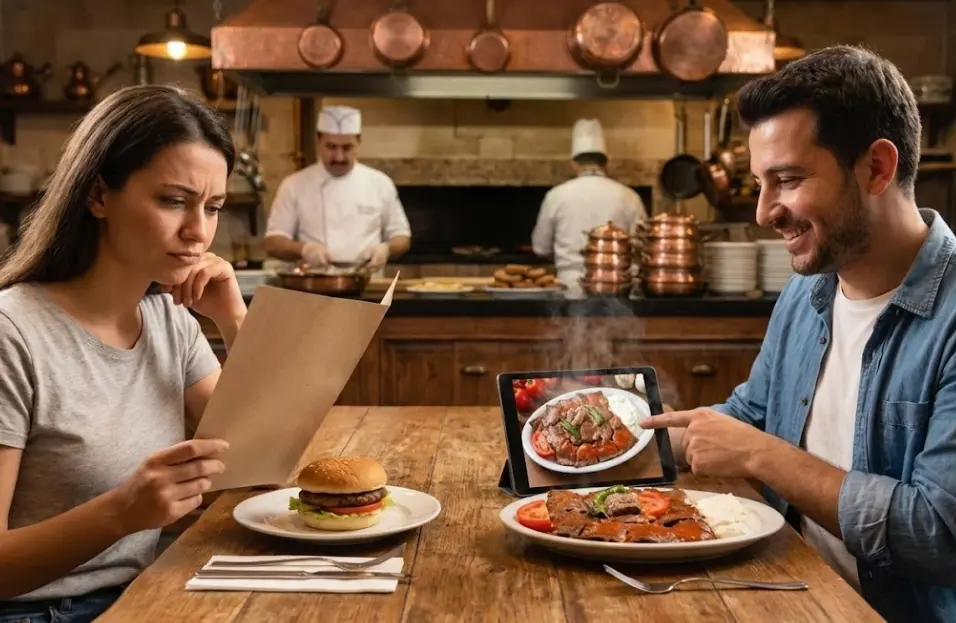
Guests judge the dish as it comes out of the bag, after the ride. Fried food softens under a closed lid, sauces can separate, and stacked components slide. Some dishes travel well and some don't. The way to find out is to order your own food to an address at the edge of your radius and open it there.
Keep the first menu short. Every extra dish means more ingredients to stock and another packaging format to buy. When most items share ingredients, there's less waste and the line moves faster. Fewer products in the walk-in also means stock turns over faster, which we go into in our piece on inventory turnover ratio.
Launch one concept first. Add a second brand once the first one gets through its peak hour without tickets backing up.
Equipment: work backward from the menu
There's no standard ghost kitchen equipment list, because the equipment follows the menu. Write out each dish's steps, mark which station each step needs, and buy for those stations only. A burger brand and a bowl brand need very different lines.
Put packaging on the list from day one. The container decides whether the dish survives the ride, and you need enough of it for your busiest night. Order handling counts as equipment too: a screen or tablet where orders come in, and a printer for tickets and bag labels. With several delivery apps running, each one may send orders to its own device, so leave counter space for that.
In a shared commissary, check what the station already includes before you buy anything. While the concept is unproven, it makes sense to lease or rent the expensive items.
What it costs and whether it pays
This page gives no average opening cost. Setups range from a few weeks of commissary rent to a full kitchen build-out, and an average across that spread wouldn't describe your case.
List the cost lines instead: kitchen rent or lease, build-out if the space is yours, equipment, packaging, permits, staff, ingredients, and the commission each delivery app takes per order. Model the commission first, because it comes back on every order. Read the contract for the commission rate, any marketing fees, and who pays for refunds on late or wrong orders.
Whether the kitchen makes money comes down to one check. After ingredients, packaging, and commission, does each order leave enough to cover rent and staff at the order count you can realistically reach by month three? Run it for a slow week, not launch week. Orders through your own channel don't carry a delivery-app commission, so once you have regular customers, a direct channel is worth adding. We cover that trade-off in online ordering for restaurants.
Where ghost kitchens go wrong
Orders can drop within a week when an app moves your brand down its listings, even though nothing changed in your kitchen. The app sets the ranking, not you, and a brand sold on a single app has the most to lose.
A bad review arrives after the guest has eaten, and it rarely tells you whether the recipe failed or the box did.
Run three brands on one cook and all three can peak in the same dinner rush. When they do, tickets back up for every brand at once.
And a ghost kitchen won't save a concept that doesn't sell. It only makes that concept cheaper to test.
Running orders, brands, and menus from one panel
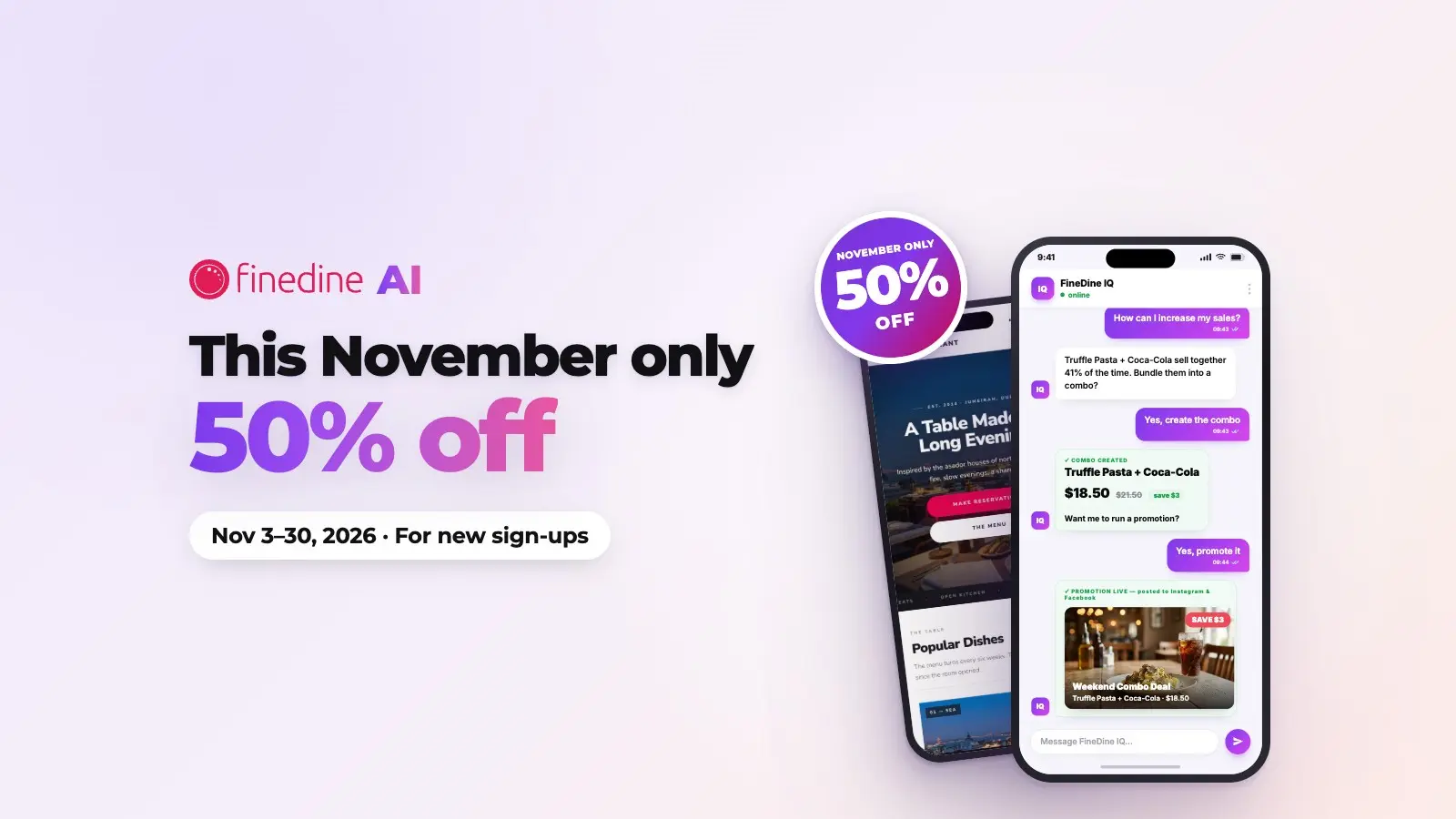
Once the kitchen is running, most of the daily work is keeping menus, prices, and orders straight across every brand and channel. In FineDine, that work happens in one panel.
Each brand has its own menu. You add a second virtual brand from the account switcher with Add New Brand, and every brand runs from the same login. With the Delivery & Pick-Up setting, guests order delivery or pickup from you directly, so those orders skip the delivery-app commission.
In AI Reports, the order density heatmap shows the hours your orders actually come in. If several brands share one line, staff from that view, because it shows whether their busy hours land on the same cook.
The integration marketplace lists POS, payment, and printer integrations. We didn't see delivery app connections there, so your menus on those apps are still managed inside each app. On the 14-day trial, some features are locked, including in-app promotions and a custom domain. The pricing page lists what each plan includes.
| Model | Fits when | Watch for |
|---|---|---|
| Shared commissary | You want to test a concept fast without a build-out | Shared storage, fixed hours, no control over the line or ventilation |
| Dedicated production kitchen | The concept is proven and you plan several brands or long hours | Lease, build-out, and permits all sit with you |
| Your existing restaurant kitchen | Your line has idle hours and the dish uses stock you already carry | Delivery peaks can collide with dine-in service |
Frequently Asked Questions
- How long does a ghost kitchen take to open?
- Mostly it depends on the kitchen model. Moving into a shared commissary that already holds its permits is the fastest route. A dedicated kitchen adds lease negotiation, build-out, and inspections, and how long those take depends on your city.
- Can I run a ghost kitchen from my existing restaurant?
- Often, yes. Before the first order, ask your local authority whether your current license covers selling under an extra brand name from the same address.
- How do I estimate orders for the first month?
- A brand that doesn't exist yet has no order history to go on. So run the cost check at a low order count first, and see whether rent and staff are still covered. Once the first weeks of orders are in, revise the estimate from your own numbers.
- Can I change one brand's prices without touching the others?
- In your own channel, yes. Each brand in FineDine has its own menu, so a price change on one brand stays on that brand. Prices on the delivery apps are changed inside each app.
- Can a ghost kitchen also take pickup orders?
- Yes, if guests can get to a door. Pickup guests need somewhere to wait away from the riders' handover spot, and a listed address that leads them to the right entrance.