If your counter has a morning queue, flow comes before atmosphere. If your regulars sit down with a laptop and a latte, seating comes before art. Sort every idea by that, because books, local art, accent walls and a nice restroom all work, and each one also takes something from you: floor space, a staff member's attention, or table turn. In a small room, some of them take more than they give. We have no sales data on any of this, so read what follows as operating judgment and not as results.
Start with the queue, not the mood board
Stand in your own morning rush before you choose a style. Where does the line form? Where do people wait for drinks, and where do they end up blocking the door? A bookshelf by the entrance or a display stand at the register lands right on that path, and it will get in the way at your busiest hour.
Slow things go at the back, fast things at the front. Browsing belongs away from the counter: art, shelves, the reading corner. The pastry case goes at the register, since that's where people tend to make a quick call while they're already standing there.
The pastry case is a selling tool, so label it for a glance
People stuck in a queue will read whatever is in front of them, and often that's the case. So it works like a second menu. A short label with the name and one line on what it is saves your cashier from answering the same question all morning. Group by type, pastries with pastries, cookies with cookies, cakes with cakes, so the eye finds things without hunting.
An ombre row of cookies photographs well, but someone has to keep refilling it. If one person restocks the case once a day, pick a layout you can still hold together on a Saturday. A plain case that's full beats a clever one that's half empty by 10:00.
Seating: decide who you want to stay
Mixed chairs, a bench and a couple of lounge seats give people a reason to linger. That suits a room built around regulars. It hurts if your margin depends on turning tables through a lunch peak.
If the floor allows, split it on purpose: comfortable seating at the back or in a corner, hard chairs and small tops near the front for the guest who'll be gone in fifteen minutes. If it doesn't allow a split, choose one kind of guest and design for them.
Count your outlets too. Laptop customers sit where the outlets are, whatever your floor plan says.
Walls, art and the reading corner
Local art for sale on the wall costs little, and because it rotates the room doesn't look the same in March as in October. But it needs an owner: someone who hangs it, someone who handles a sale, someone who takes it down. Without that person, skip it.
A reading nook with shelves and big chairs fits a quiet daytime room. In a small shop with a morning queue it backfires, because the nook turns into the one seat a single guest holds for three hours. Whether that matters depends on your average ticket, and only you have that number.
Lighting and the accent wall
Daylight is kind to the room and to drink photos alike, so give the best window table to guests and don't use it for storage. Where daylight is thin, warm light at table height does more than a bright ceiling.
An accent wall in your brand color is the cheapest change here: paint and a weekend. Put it behind the spot where guests sit or wait, not behind the espresso machine, or the photo ends up with your trash bin in it. If the shop becomes a bar at night, look at the color under evening light before you commit.
The restroom as a brand surface
A restroom with decent light and some character is a reasonable place for a small budget, since guests may well notice it. The condition matters more than the decor, though. Stocked supplies and a line on the closing checklist come first, because a styled restroom with no paper is worse than a plain one.
What the idea list looks like on the menu
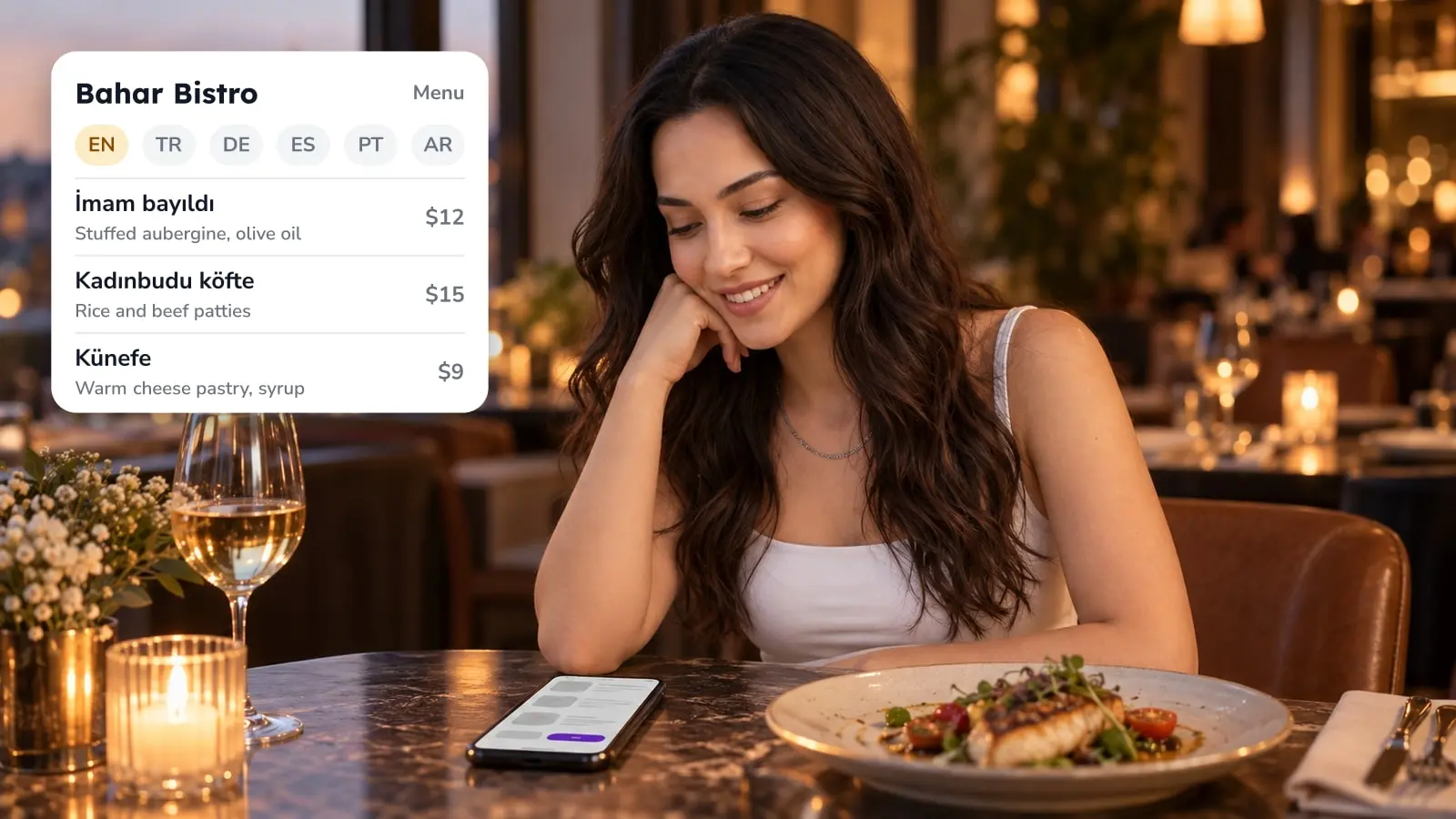
A good room still needs a menu that matches it. If you sell a drink in several sizes, show each size and price on the one item instead of three separate lines. In FineDine's Menu Manager you can set size and portion prices on a single item and add a caffeine amount in mg per size, which helps a guest choosing between a double shot and a decaf.
Photos matter as much as the wall. With no photographer, AI Media Studio can enhance an existing item photo or create one. Generation uses credits and the cost depends on the type of image, so look at the credit amounts in the panel before you plan a whole menu. If the menu has to run in a second language, the Translation Center handles it, and how many languages you get depends on your plan, so check the pricing page.
You can also run the menu in display-only mode, without ordering, so guests read at the table and still order at the counter. That fits a small shop. Counter-and-QR ordering fits a room where the queue is the problem. We go into that in our piece on QR codes and the guest experience.
What we can't tell you about trends
People search for 2026 café trends. We don't have a dated, sourced trend study to quote, and a trend list without one is guesswork, so we won't write it. What holds from year to year is plainer: a room that matches how you serve, a menu a guest can read in the time they wait, and one or two corners people photograph without being asked.
If you're still deciding how table and counter service should work together, the notes on online ordering for restaurants cover where it helps and where it adds work.
Frequently Asked Questions
- What can a coffee shop sell besides coffee?
- A pastry case, simple food, tea and cold drinks are the usual additions. Choose what your team can make during a rush without slowing the espresso line, and keep the case small enough to restock properly.
- How do I choose between a cozy room and a fast-turn room?
- Look at your morning queue and your average ticket. A busy counter with small tickets lives on turnover, so put hard seating near the front. A quiet room with bigger tickets can afford lounge seats and a reading nook.
- Can I show caffeine content on a café menu?
- Yes. In Menu Manager, each price option on an item has a caffeine field in mg, set per size, so every size can carry its own number.
- Is it worth making an Instagram-friendly corner?
- If it's a painted wall or a good window table, it costs little. We have no measured data on how much business it brings, so keep the spend small and watch whether guests actually use it.
- Do I need AI photos for my café menu?
- Not necessarily. Real photos of your own drinks work fine. AI Media Studio helps when you have none or when your photos don't match each other. It uses credits, and the cost varies by image type.